

 English
 German
 French
 Russian
 Spanish
 Japanese
 Korean
 Portuguese
 Ukrainian
 Arabic
 Italian
 Afrikaans
 Albanian
 Armenian
 Azerbaijani
 Basque
A slitter rewinder is a roll-to-roll converting machine used to turn a wide jumbo roll into narrower finished rolls. It unwinds the parent roll, slits the material into the required widths, and rewinds each slit web onto cores or shafts with controlled tension.
For converters working with flexible packaging films, thermal transfer ribbons, thermal paper rolls, hot stamping foils and other web materials, the slitter rewinder is a key machine in daily production. It directly affects roll width accuracy, edge quality, winding stability, material waste and the performance of the roll in the next process.
If you are new to slitting and rewinding, this guide explains what a slitter rewinder is, how it works, which materials it can process, and what to check before choosing the right machine for your production line.
What Is a Slitter Rewinder?
A slitter rewinder combines two processes: slitting and rewinding.
Slitting means cutting a wide web material into narrower widths. Rewinding means winding the slit webs back onto new cores or shafts to create finished rolls. In simple terms, a slitter rewinder converts one large parent roll into multiple smaller rolls that are ready for printing, packaging, labeling, barcode printing, receipt roll production, foil stamping or other converting processes.
Slitter rewinders are widely used for materials such as:
- BOPP, PET, PE, LDPE and PVC films
- Laminated and printed flexible packaging films
- Thermal paper and POS receipt paper
- Thermal transfer ribbon and barcode ribbon
- Hot stamping foil, cold foil and metallized foil
- Aluminum foil, label materials and other roll materials
Because these materials behave differently during tension, cutting and rewinding, the machine configuration must match the material and finished roll requirements.
How Does a Slitter Rewinder Work Step by Step?
Although different machines may use different structures, the basic slitting and rewinding process usually includes the following steps.
1. Jumbo Roll Loading
Production starts by loading the jumbo roll onto the unwinding section. Depending on the roll weight, roll diameter and material type, the machine may use air shaft unwinding, shaftless unwinding, hydraulic loading or customized shaft structures.
For heavy rolls or wide web materials, a stable unwinding design helps reduce operator workload and improves production safety.
2. Unwinding and Web Feeding
After the parent roll is loaded, the material is unwound and fed into the machine. Smooth unwinding is important because unstable feeding can cause web movement, wrinkles or tension fluctuation.
This is especially important for thin films, TTR ribbons and foil materials, where small tension changes may affect finished roll quality.
3. Web Guiding
Before the material enters the slitting section, it must stay aligned. A web guiding system, often called EPC, helps control the web position and keeps the material running in the correct path.
Good web guiding reduces edge deviation and helps maintain accurate finished roll widths.
4. Tension Control
Tension control is one of the most important factors in slitting and rewinding. If tension is too high, the material may stretch, wrinkle or deform. If tension is too low, the finished roll may become loose, uneven or unstable.
Stable tension helps improve:
- Roll surface quality
- Edge alignment
- Rewinding tightness
- Width accuracy
- Material utilization
- Downstream processing stability
For flexible packaging films, thermal transfer ribbons and hot stamping foils, tension control is often the difference between a usable roll and a rejected roll.
5. Slitting
The slitting section cuts the web into the required widths. Common cutting methods include:
- Razor slitting for thin films and certain flexible materials
- Shear slitting for cleaner edges on selected films, paper and laminates
- Circular knife slitting for specific roll materials and converting needs
- Score cutting for certain paper or pressure-sensitive materials
The right cutting method depends on material thickness, structure, edge quality requirement and production speed.
6. Rewinding
After slitting, each narrow web is rewound onto a new core or shaft. A good rewinding system should produce rolls with stable hardness, smooth surface, accurate edge alignment and proper core positioning.
In real production, finished roll quality is often judged by whether the roll can run smoothly in the customer’s next process, such as printing, labeling, packaging, stamping or POS roll packing.
7. Finished Roll Unloading
After rewinding is completed, finished rolls are removed from the rewinding section. For higher efficiency, some machines can be equipped with automatic turret unloading, which helps reduce manual handling and shorten changeover time.
Main Components of a Slitter Rewinder Machine
A slitter rewinder is a complete converting system, not just a cutting machine. The main components usually include:
Unwinding Unit
The unwinding unit holds the parent roll and controls how the material enters the machine. It may use air shafts, shaftless structures or customized shaft designs based on roll size and production requirements.
Web Guiding System
The web guiding system keeps the material aligned during operation. This helps reduce width errors and improves finished roll consistency.
Tension Control System
The tension control system manages web tension from unwinding to rewinding. Stable tension helps prevent wrinkles, loose rolls, telescoping and uneven roll surfaces.
Slitting Unit
The slitting unit cuts the material into narrower widths. Blade type, knife pressure, blade sharpness and slitting method all affect edge quality.
Rewinding Unit
The rewinding unit forms the finished rolls. HAVESINO machines can be configured with dual rewinding shafts, and selected models can also support four-shaft rewinding according to production requirements.
Control System
The control system helps operators manage speed, tension, rewinding settings and machine operation. Some HAVESINO machines can be equipped with Siemens PLC control for stable operation and easier parameter management.
Unloading System
Finished roll unloading can be manual, semi-automatic or automatic. For higher output and reduced labor intensity, automatic turret unloading can be selected.
What Materials Can a Slitter Rewinder Process?
A slitter rewinder can be used for many roll materials. The machine structure should be selected according to the material and application.
Flexible Packaging Films
Flexible packaging converters often process BOPP, PET, PE, LDPE, PVC, CPP, printed films and laminated films. These materials are widely used in food packaging, pouch making, printing and lamination.
Film slitting requires stable tension, clean edge quality and smooth rewinding. If the machine configuration is not suitable, the finished rolls may show wrinkles, telescoping, loose winding or poor edge alignment.
Thermal Transfer Ribbon
Thermal transfer ribbon, also known as TTR, is used for barcode printing, label printing and packaging identification. Common types include wax ribbon, wax-resin ribbon and resin ribbon.
TTR slitting requires accurate width control, low waste, stable tension and smooth rewinding. Because ribbon materials are thin and sensitive, the rewinding system and shaft configuration are especially important.
Thermal Paper and POS Rolls
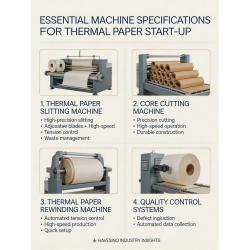
Thermal paper slitting machines are used to produce POS rolls, receipt rolls, cash register rolls and ATM paper rolls. For this application, customers usually care about roll size consistency, cutting accuracy, production speed, core size and packaging efficiency.
For high-volume production, a thermal paper slitter can also be combined with printing or packing-related equipment.
Hot Stamping Foil
Hot stamping foil, cold foil and metallized foil require clean edges and smooth roll surfaces. Burrs, rough edges or unstable winding can affect downstream stamping results and increase material waste.
For foil slitting, buyers should pay attention to blade precision, tension control, roll surface quality and finished roll diameter.
Why Tension Control and Roll Quality Matter
Many buyers focus on speed when comparing slitter rewinders, but speed alone does not guarantee good production. Roll quality is often more important.
A high-quality finished roll should have:
- Accurate width
- Clean and smooth edges
- Stable roll hardness
- Flat roll surface
- Good core alignment
- No wrinkles
- No telescoping
- No loose winding
- Minimal burrs or edge defects
Poor roll quality may create problems in downstream processes. Uneven TTR rolls can affect barcode printing. Loose POS rolls can affect packing. Burrs on hot stamping foil can affect stamping quality. Wrinkles in film rolls can affect lamination or bag making.
That is why a good slitter rewinder should be evaluated by machine structure, tension stability, cutting method, rewinding design, automation level and long-term service support—not only by price.
How to Choose the Right Slitter Rewinder
Before choosing a slitter rewinder, prepare the key production information. This will help the manufacturer recommend a suitable machine configuration.
1. Material Type
Start with the material you need to slit. Film, paper, foil and ribbon all require different tension, cutting and rewinding settings.
2. Material Thickness and Width
Confirm the jumbo roll width, material thickness and finished roll width. These factors affect machine width, blade arrangement, tension control and rewinding structure.
3. Finished Roll Diameter and Core Size
Finished roll diameter and core size determine the rewinding design. HAVESINO accepts shaft customization based on current market-standard shaft requirements, helping customers match local roll specifications and existing production habits.
4. Required Production Speed
A smaller factory may prefer a flexible, cost-effective machine, while a high-volume converter may need a high-speed or fully automatic solution.
5. Cutting Method
The cutting method should match the material. Razor, shear and circular knife systems all have different advantages. Choosing the wrong method may lead to rough edges, burrs or excessive waste.
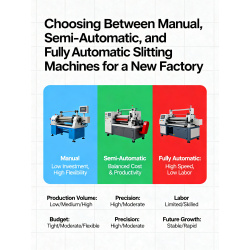
6. Automation Level
Automation can reduce labor, improve consistency and shorten changeover time. HAVESINO can provide fully automatic versions for different machine categories. Depending on the model and application, machines can be equipped with automatic turret unloading, dual rewinding shafts, four-shaft rewinding and Siemens PLC control.
7. Technical Support
A slitter rewinder is a long-term production investment. Buyers should consider installation guidance, operation training, spare parts support and long-term technical support, not just the machine price.
Recommended HAVESINO Slitter Rewinder Solutions
HAVESINO designs and manufactures slitter rewinders for converters working with flexible packaging films, thermal transfer ribbons, thermal paper rolls and hot stamping foils.
Since 2010, HAVESINO has focused on slitting, rewinding and packaging-related equipment. With 16 years of industry experience, the company has served customers in more than 100 countries and regions, with over 2,000 installed machines worldwide.
HAVESINO provides solutions for different roll materials and production needs:
Flexible Packaging Slitting
For BOPP, PET, PE, LDPE, PVC, printed film and laminated film, HAVESINO can recommend flexible packaging slitter rewinders according to material thickness, web width, finished roll diameter and required production speed.
TTR Ribbon Slitting
For barcode ribbon, wax ribbon, wax-resin ribbon and resin ribbon, HAVESINO provides TTR slitting machines from entry-level models to high-speed fully automatic solutions.
Thermal Paper and POS Roll Slitting
For thermal paper, POS rolls, receipt rolls and cash register rolls, HAVESINO can provide manual, semi-automatic and fully automatic thermal paper slitting solutions, with options for printing and packing-related production needs.
Hot Stamping Foil Slitting
For hot stamping foil, cold foil and metallized foil, HAVESINO can provide foil slitter rewinders designed for clean edges, smooth rewinding and reduced material waste.
If you are not sure which machine fits your production, share your material type, jumbo roll width, material thickness, finished roll width, core size, target speed and production capacity. HAVESINO can help recommend a suitable slitter rewinder configuration.
FAQ About Slitter Rewinders
What is the difference between a slitter and a slitter rewinder?
A slitter mainly refers to the cutting function. A slitter rewinder includes both slitting and rewinding, so it cuts the material and rewinds it into finished rolls in one continuous process.
What materials can a slitter rewinder process?
A slitter rewinder can process flexible packaging films, laminated films, thermal paper, POS paper, TTR ribbon, barcode ribbon, hot stamping foil, cold foil, aluminum foil, label materials and other roll materials.
Which cutting method is best for film slitting?
It depends on the film type, thickness, edge quality requirement and production speed. Razor slitting is often used for thin films, while shear or circular knife slitting may be used for other materials or cleaner edge requirements.
Why is tension control important in slitting and rewinding?
Tension control affects roll hardness, edge alignment, surface flatness and material stability. Poor tension may cause wrinkles, loose rolls, telescoping, uneven edges or material deformation.
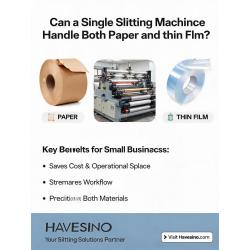
Can one machine process different materials?
Some slitter rewinders can process different materials with suitable configurations and change parts. However, not every machine is suitable for every material. It is better to confirm material type, thickness, width and finished roll requirements before selecting a machine.
What information should I provide before requesting a quote?
Please provide material type, jumbo roll width, material thickness, finished roll width, finished roll diameter, core size, target speed and expected production capacity. This information helps the manufacturer recommend a more suitable machine.
Conclusion
A slitter rewinder is a key machine for roll-to-roll converting. It does more than cut material. It affects finished roll quality, production efficiency, material waste and downstream processing performance.
For new buyers, understanding how a slitter rewinder works is the first step. The next step is choosing a machine that matches your material, roll size, cutting method, tension requirements and automation level.
HAVESINO provides slitting and rewinding solutions for flexible packaging films, TTR ribbons, thermal paper rolls, hot stamping foils and other roll materials. Send us your production requirements, and our team can help recommend a suitable slitter rewinder for your production line.


Leave A Comment