

 English
 German
 French
 Russian
 Spanish
 Japanese
 Korean
 Portuguese
 Ukrainian
 Arabic
 Italian
 Afrikaans
 Albanian
 Armenian
 Azerbaijani
 Basque
Direct answer: Razor slitting is usually the more practical choice for thin, uniform plastic films when low cutting force, simple setup and low tooling cost are priorities. Shear slitting uses paired rotary knives and is generally better suited to thicker, tougher or laminated webs where the converter needs a more controlled cutting action and durable knife life. Neither method is automatically better for every film. The correct choice depends on material structure, thickness, edge-quality target, production speed, slit width, tension stability and how often the plant changes jobs.
For flexible packaging converters, the most important point is not to choose a knife system from the film name alone. BOPP, PET, PE and laminated structures can behave very differently depending on thickness, coating, printing, lamination and winding conditions. A reliable decision should be based on the actual material sample and finished-roll requirement.
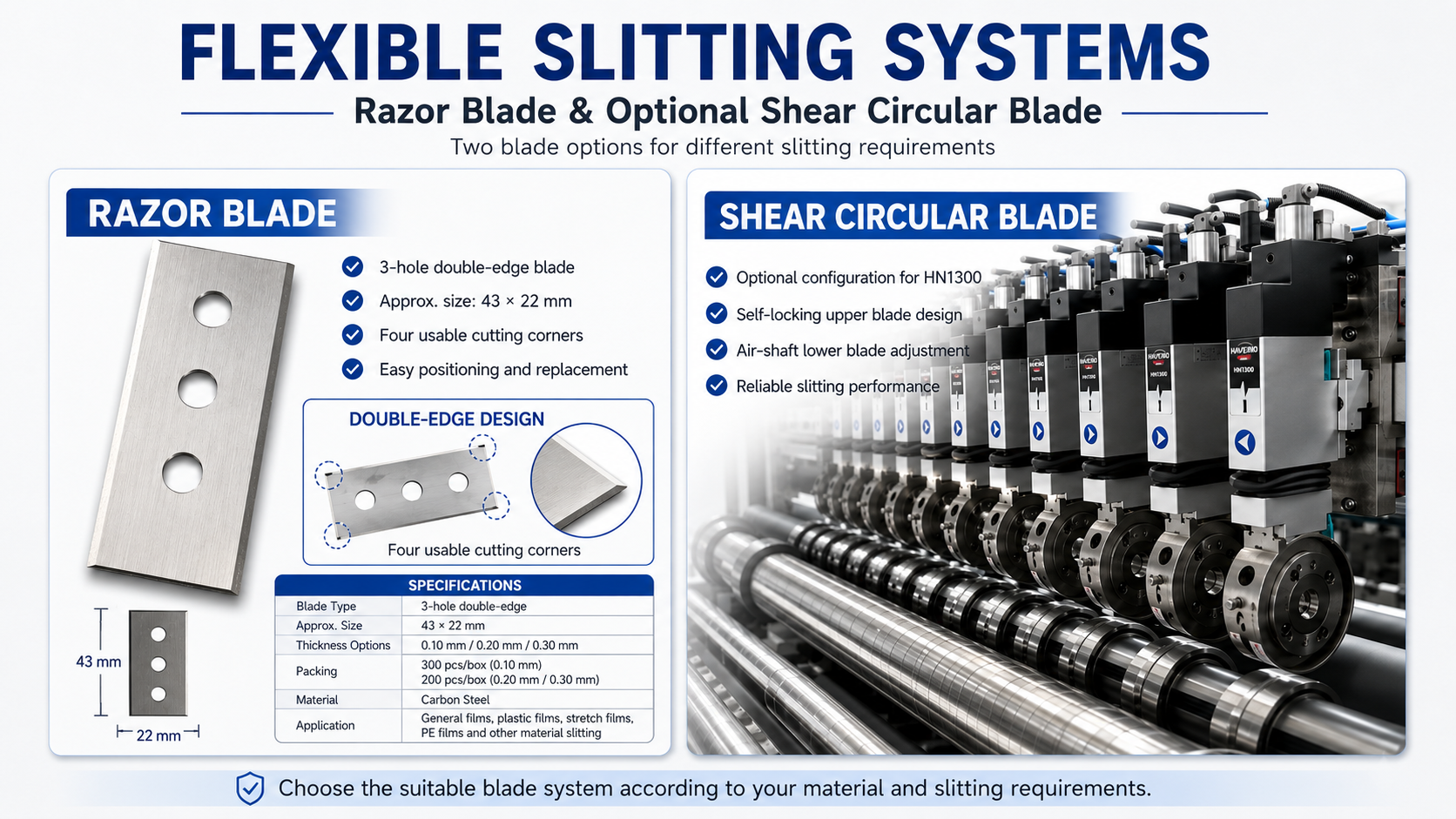
Quick Comparison: Razor Slitting vs Shear Slitting
Factor | Razor Slitting | Shear Slitting |
Cutting action | A sharp blade slices through the moving web | Upper and lower circular knives cut with a scissor-like action |
Typical strength | Simple, low-force cutting for thin films | Controlled cutting for a wider range of tougher or thicker webs |
Common film use | Thin BOPP, OPP, PE, PET and similar light webs | Laminated films, thicker structures and applications needing robust edge control |
Setup | Relatively simple and fast | More precise knife positioning, overlap and alignment are required |
Blade life | Usually shorter; blades are inexpensive and quick to replace | Generally longer, but knives require correct setup and maintenance |
Investment / tooling | Lower | Higher |
Best decision rule | Choose when the web cuts cleanly with low force and stable tension | Choose when the structure needs stronger, more controlled shearing action |
Important: This table is a selection guide, not a universal rule. The same PET film, for example, may be slit successfully with a razor system in one application and with a shear system in another if thickness, laminate structure, edge requirement or operating conditions are different.
How Razor Slitting Works
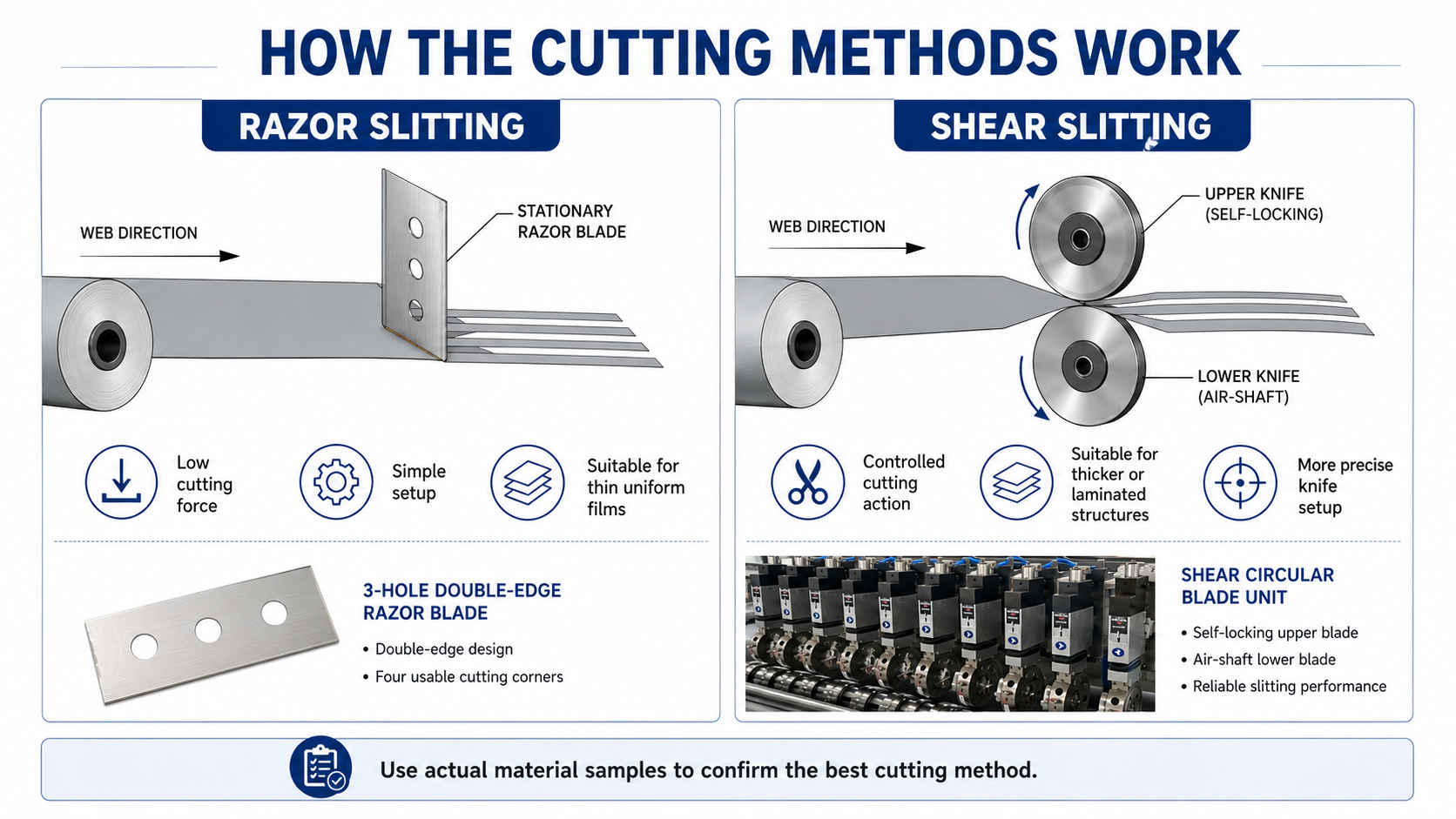
Razor slitting uses a very sharp blade positioned in the web path. As the film travels through the slitting section, the blade penetrates and separates the moving web. In film converting, razor cutting can be configured with the web supported by a grooved roll or as an in-air cutting arrangement, depending on the machine and material.
Its main advantage is simplicity. The cutting force is low, the blade itself is inexpensive, and changeover can be straightforward. For thin homogeneous films, this can produce a clean edge without the more complex knife alignment required by a rotary shear system.
When Razor Slitting Is Usually the Better Choice
- The material is a thin, relatively uniform plastic film.
- Fast blade replacement and simple knife setup are important.
- The plant processes many light-gauge film jobs where a razor already delivers acceptable edge quality.
- Lower tooling cost is important and short blade life is manageable.
- The web is stable enough that the blade can cut without excessive vibration, wandering or deformation.
Razor slitting is common for thin plastic films, but blade sharpness and web stability still matter. A dull blade, poor knife position, unstable tension or excessive web movement can quickly reduce edge quality even if the basic cutting method is correct.
How Shear Slitting Works
Shear slitting uses two circular knives: an upper knife and a lower knife. The knives overlap slightly and cut the web with a scissor-like action. Because the cut depends on the relationship between both knives, shear performance is more sensitive to knife alignment, overlap, side load and blade condition.
The benefit is a more mechanically supported and controlled cutting action. This makes shear slitting useful for materials that are harder to cut cleanly with a simple razor, including many laminated structures and heavier webs. The trade-off is more setup work, higher tooling cost and greater maintenance discipline.
When Shear Slitting Is Usually the Better Choice
- The film is thicker, tougher or made from multiple laminated layers.
- The converter needs a durable knife system for repeated production.
- The edge must remain stable on material that does not respond well to a razor.
- The job requires a more controlled rotary cutting action.
- The production team can maintain correct knife overlap, alignment and blade condition.
BOPP, PET, PE and Laminated Film: Which Method Fits Better?
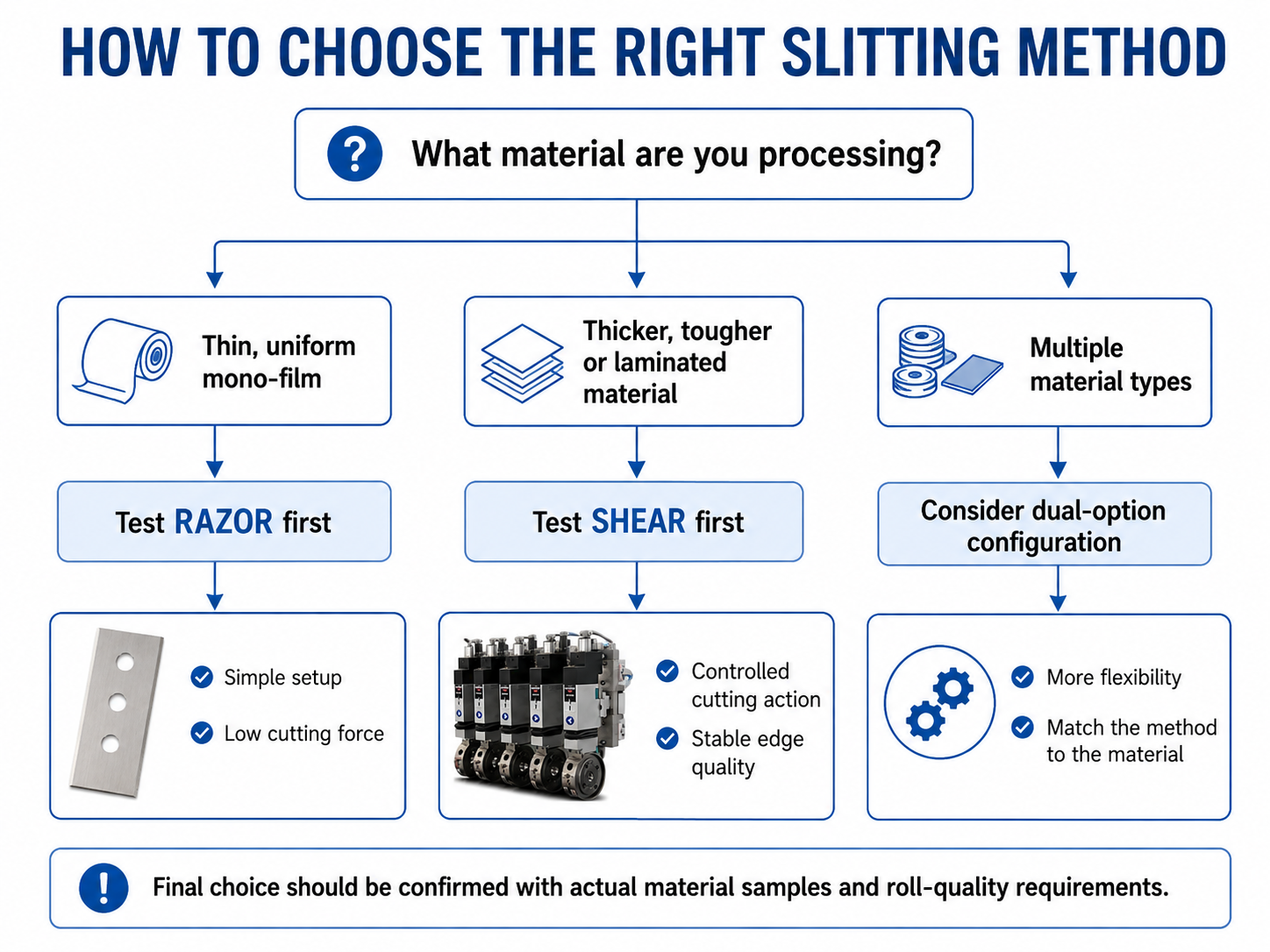
Material / Structure | Typical Starting Point | Why | What Must Be Verified |
Thin BOPP / OPP | Often razor | Low cutting force and simple high-speed film setup | Thickness, edge quality, web stability, blade wear |
Thin PET | Razor or shear | PET is not a one-method material; both can work depending on structure | Thickness, stiffness, coating/printing, edge target |
PE / LDPE | Often razor, but test carefully | Soft/stretchable films can cut well with a sharp blade | Tension, stretch, web movement, edge deformation |
Laminated film | Often shear | Multiple layers can need stronger and more controlled cutting | Layer structure, adhesive, thickness, edge delamination |
Printed / coated film | Application-specific | Surface and coating can change cutting behavior | Scratch risk, coating damage, dust, edge appearance |
The key word in this table is “starting point.” A buyer should not approve a knife system only because another converter uses the same film name. The actual web structure and finished-roll target must be checked.
Why Edge Quality Is Not Only a Knife Problem
A common purchasing mistake is to blame every rough edge on the blade type. In practice, cutting quality is influenced by the complete slitting process. Even the correct knife can perform poorly if the web is unstable.
- Unstable unwind or rewind tension can allow the web to move during the cut.
- A worn razor can increase drag and reduce edge consistency.
- Incorrect shear overlap or alignment can create poor cutting conditions.
- Web guiding errors can make slit width and edge alignment unstable.
- Dirty or damaged rollers can introduce vibration or tracking problems.
- Material thickness variation or lamination inconsistency can change the cutting response across the roll.
That is why tension control in film slitting and rewinding should be evaluated together with the knife system. Selecting a more expensive blade system will not correct an unstable web path or unsuitable winding condition.
What Changes at Higher Production Speeds?
As production speed increases, the knife system has less time to tolerate instability. Blade condition, web tension, vibration, alignment and material behavior become more visible. The correct question is therefore not simply “Which method can run faster?” but “Which method can maintain the required edge quality on this material at the intended working speed?”
For buyers, a trial with the actual material is more useful than comparing only maximum-speed specifications. The trial should evaluate edge quality, slit-width consistency, web stability and the finished roll after rewinding—not just whether the machine reaches a headline speed.
7 Questions to Ask Before Choosing Razor or Shear Slitting
- What is the exact material structure: mono-film, printed film, coated film or laminate?
- What is the material thickness and how much does it vary across the roll?
- What minimum finished slit width is required?
- How important are edge appearance, dust level and downstream processing quality?
- What production speed must be sustained with acceptable roll quality?
- How often will operators change slit widths or material types?
- Can the machine be configured with the alternative knife system if production requirements change later?
A Practical HAVESINO Approach: Keep the Knife Choice Flexible
For converters handling more than one film structure, flexibility can be more valuable than choosing one knife method permanently. Selected HAVESINO film slitter configurations can support both razor and shear blade systems.
For example, the HAVESINO HN1300 Duplex Slitter Rewinder is listed for flexible packaging materials including BOPP, OPP, CPP, PET, OPA, LDPE and laminates. Its blade unit can be configured with razor slitting and an optional shear blade system. This type of arrangement is useful when a converter needs to process different film structures instead of optimizing the machine around only one substrate.
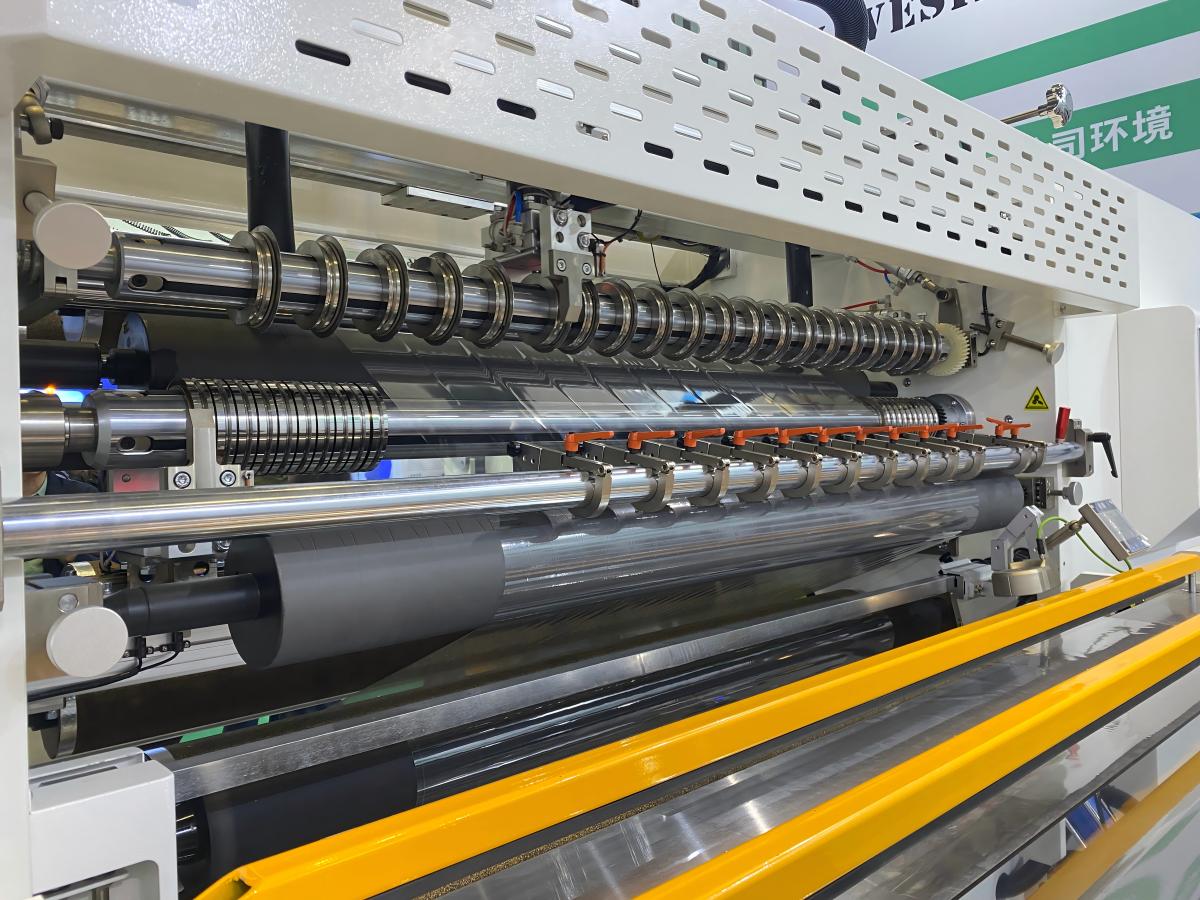
Before selecting a machine, review how to choose a film slitting machine for flexible packaging and provide the supplier with real roll data. The knife system should be decided together with tension control, web guiding, rewinding structure and finished-roll requirements.
Decision Guide: Which Method Should You Choose?
Choose razor slitting first when: you mainly process thin, uniform plastic films, want a simple and economical setup, and your actual samples show that razor cutting can maintain the required edge quality.
Choose shear slitting first when: you process thicker, tougher or laminated structures, need a more controlled rotary cutting action, or your razor tests do not achieve stable edge quality.
Choose a machine with both options when: your factory handles several film structures and you want the flexibility to change the cutting method according to the material rather than buying a separate slitter for every job.
FAQ
Is razor slitting always better for PET film?
No. Thin PET can be slit effectively with a razor in many applications, but PET thickness, stiffness, coating, printing, laminate structure and edge requirements can change the best choice. Shear slitting may be more suitable for other PET-based structures.
Does shear slitting always produce a cleaner edge?
No. A properly selected razor can produce a very clean edge on thin film. Shear slitting becomes advantageous when the material benefits from a more supported and controlled cutting action. Knife condition and setup are critical for both methods.
Which system is cheaper to maintain?
Razor systems usually use lower-cost blades and simpler hardware, but the blades typically require more frequent replacement. Shear knives generally last longer but need correct alignment, overlap and maintenance.
Can one slitter rewinder use both razor and shear blades?
Some machines can. The exact configuration must be confirmed by model. HAVESINO lists the HN1300 flexible packaging slitter with razor slitting and an optional shear blade system.
What information should I send before asking for a knife recommendation?
Send the material name and structure, thickness, mother-roll width and diameter, finished slit width, finished-roll diameter, core size, target working speed and any existing edge-quality problem. A material sample is especially useful.
Conclusion
Razor slitting and shear slitting are both established methods for film converting, but they solve different production needs. Razor slitting is attractive for thin films because it is simple, economical and uses low cutting force. Shear slitting provides a more controlled rotary cut and is often preferred for tougher, thicker or laminated structures.
The best decision should come from the actual material—not from a generic rule. Compare edge quality, blade life, setup time, slit width, tension stability and finished-roll quality under realistic production conditions.


Leave A Comment