

 English
 German
 French
 Russian
 Spanish
 Japanese
 Korean
 Portuguese
 Ukrainian
 Arabic
 Italian
 Afrikaans
 Albanian
 Armenian
 Azerbaijani
 Basque
In thermal transfer ribbon slitting, waste control is not only about saving material. It also affects finished roll appearance, barcode printing quality, delivery stability, and the long-term cost of ribbon converting. For producers working with wax ribbon, wax-resin ribbon, resin ribbon, coding foil, or similar TTR materials, reducing waste requires a practical combination of material handling, accurate slitting, stable tension control, and smooth rewinding.
A thermal transfer ribbon slitting process may generate waste during roll loading, web threading, blade adjustment, edge trimming, splice handling, rewinding, inspection, and roll changeover. Some waste is unavoidable, but excessive waste often comes from unstable tension, unsuitable blade conditions, poor web alignment, weak operator procedures, or a TTR slitter that does not match the production requirement. This article explains how converters can reduce waste step by step while keeping production practical and consistent.
What Is Waste in Thermal Transfer Ribbon Slitting?
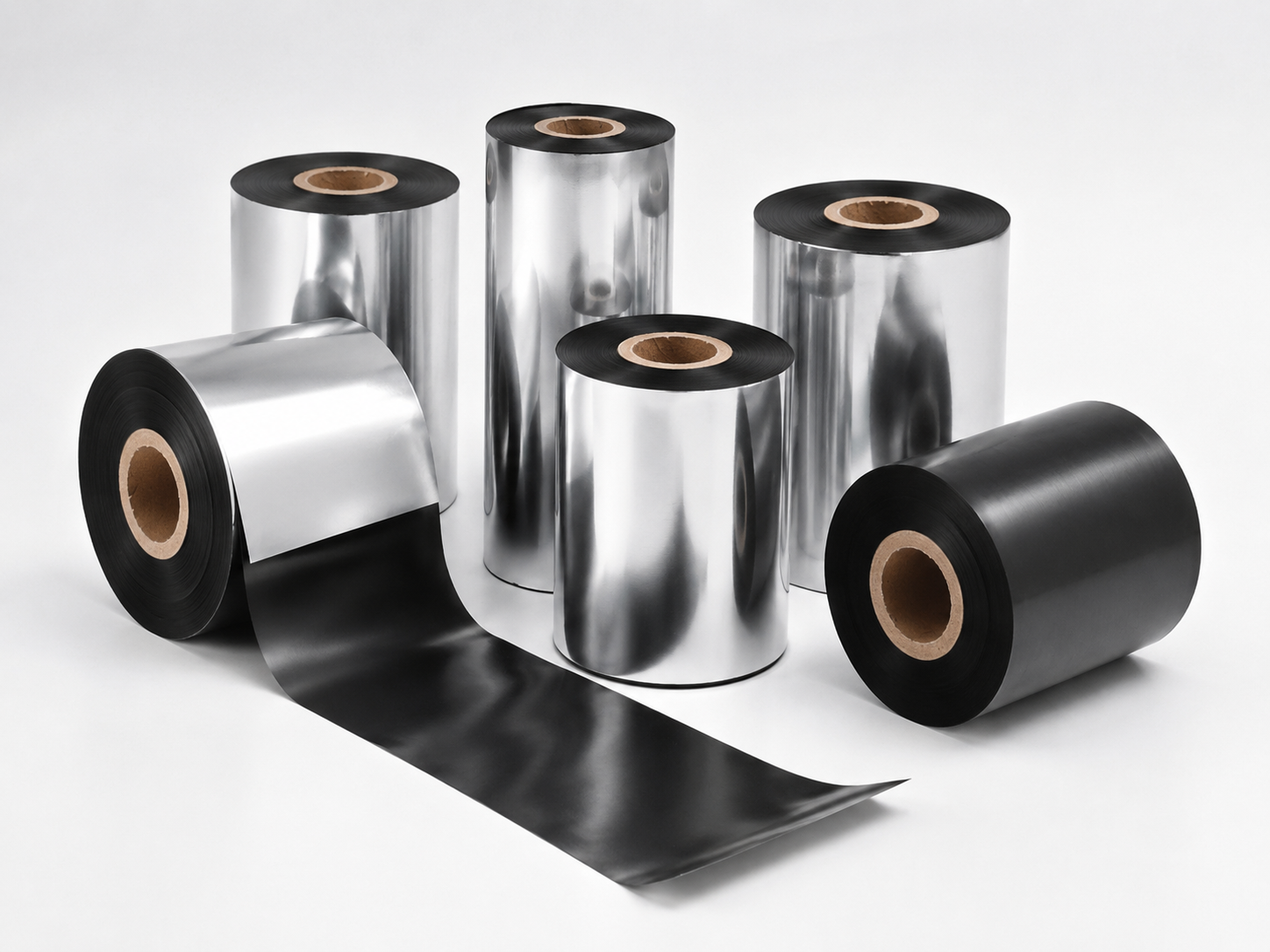
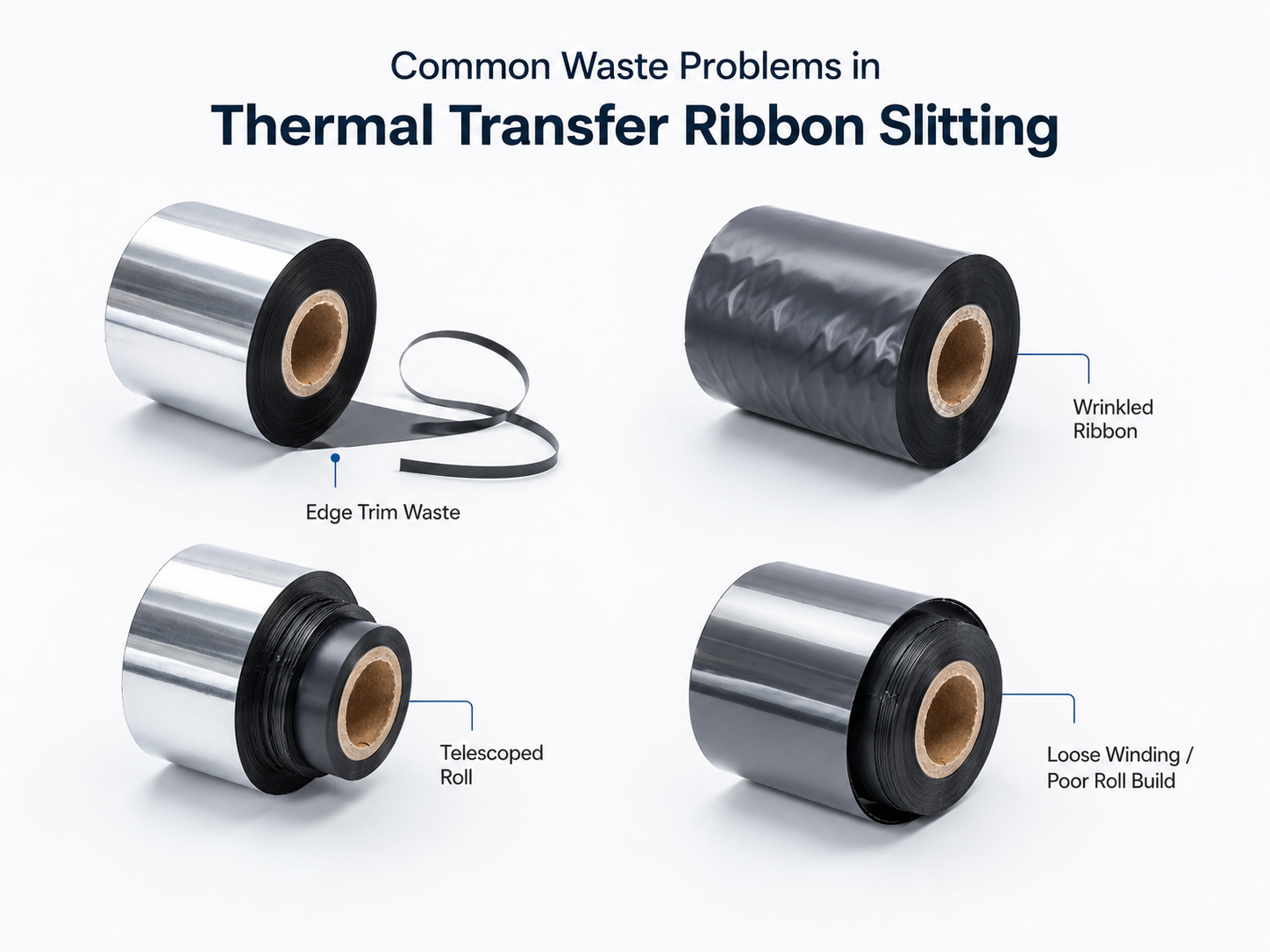
Waste in thermal transfer ribbon slitting refers to any material that cannot become a sellable finished ribbon roll. It includes edge trim, defective rolls, wrinkled material, telescoped rolls, damaged cores, start-up scrap, trial-running scrap, splice-related loss, and rejected rolls caused by poor winding quality. In some factories, the visible waste bin is only part of the problem. Hidden waste can also come from rework time, unstable output, extra inspection, customer complaints, or production downtime.
Because TTR materials are thin, sensitive, and usually converted into narrow finished rolls, small slitting or rewinding problems can quickly become repeated waste. A slight tension fluctuation may create roll hardness variation. A dull blade may cause dust or rough edges. A small alignment error may affect many rolls in one production batch.
Why Thermal Transfer Ribbon Slitting Needs Careful Waste Control
Thermal transfer ribbon is used for barcode labels, logistics labels, product identification, retail labels, and industrial marking. The finished ribbon roll must run smoothly on printers, so the slitting and rewinding process needs stable roll tension, clean edges, accurate width, and neat roll appearance. If a finished roll has wrinkles, uneven winding, or poor edge quality, the customer may face printing interruption, ribbon breakage, or inconsistent print results.
For this reason, waste reduction should not mean simply running the machine faster. A better goal is to build a stable process where material is controlled from unwind to rewind, operators can repeat the same settings, and the slitter rewinder supports the required roll quality. In many cases, stable production brings more real savings than chasing the highest possible speed.
Common Waste Sources in Thermal Transfer Ribbon Slitting
Before reducing waste, converters should identify where waste is created. The table below summarizes common waste sources and practical control methods.
Waste Source | Typical Symptom | Practical Control Method |
Unstable unwind tension | Wrinkles, web wandering, uneven roll hardness | Check unwind brake/control settings and keep tension suitable for the material |
Poor blade condition | Rough edge, dust, ribbon breakage | Use suitable blades, maintain blade sharpness, and set blade position carefully |
Incorrect web path | Scratches, misalignment, unstable tracking | Confirm threading route, roller cleanliness, and web guiding before production |
Inconsistent rewinding pressure | Loose rolls, tight rolls, telescoping | Optimize rewinding tension and contact pressure according to roll size |
Frequent manual adjustment | Higher start-up waste and unstable output | Record workable settings and standardize operator procedures |
Unsuitable machine configuration | Repeated defects even after adjustment | Choose a TTR slitter rewinder based on roll size, material type, and output target |
Improve Material Preparation Before Slitting
Waste reduction starts before the mother roll is loaded. Operators should confirm the material type, coating direction, roll surface condition, roll width, and core condition. If the material has obvious defects, loose winding, damaged edges, or uneven roll hardness, the slitting process will become more difficult. Recording incoming material quality can help the production team distinguish between machine-related waste and material-related waste.
It is also useful to prepare enough cores, labels, packaging materials, and tools before starting production. When operators stop frequently to find accessories or adjust small details, more material may be wasted during re-threading and restart. A clean and organized preparation area supports smoother operation.
Control Blade Setup for Clean Thermal Transfer Ribbon Slitting
Blade condition directly affects edge quality in thermal transfer ribbon slitting. A blade that is not sharp enough may create dust, burrs, or uneven edges. An incorrect blade angle or pressure may damage the ribbon surface or increase breakage. For narrow ribbon rolls, even a small cutting problem may affect many finished rolls at the same time.
Operators should check blade sharpness, blade position, slitting width, and overlap before production. Blade replacement should be part of a regular maintenance routine rather than a reaction after quality problems appear. For sensitive TTR materials, the goal is clean slitting with minimal stress on the web.
Use Stable Tension Control to Reduce Ribbon Waste
Stable tension control is one of the most important factors in thermal transfer ribbon slitting. If tension is too high, the ribbon may stretch, deform, or become too tight during rewinding. If tension is too low, the web may wrinkle, wander, or rewind loosely. Both situations can lead to rejected rolls.
A suitable TTR slitting machine should support stable tension from the unwind section through the slitting area and into the rewinding shafts. During production, operators should avoid large and sudden tension changes. Instead, they should adjust settings gradually based on material response, finished roll diameter, and roll quality. For repeat orders, keeping a record of proven tension settings can reduce trial waste in future batches.
Optimize Rewinding Quality for Sellable Finished Rolls
In many ribbon converting factories, waste is not created at the blade but at the rewinding stage. Finished rolls may be rejected because they are too loose, too tight, uneven, telescoped, or poorly aligned. Good rewinding quality requires coordination between tension, shaft condition, core quality, contact pressure, and roll change procedures.
Operators should check whether the finished roll builds smoothly from small diameter to final diameter. The roll edge should remain neat, and the roll should not show obvious wrinkles or hardness variation. For high-volume barcode ribbon production, stable rewinding also reduces downstream packaging and inspection pressure.
Recommended HAVESINO Solution for TTR Waste Reduction
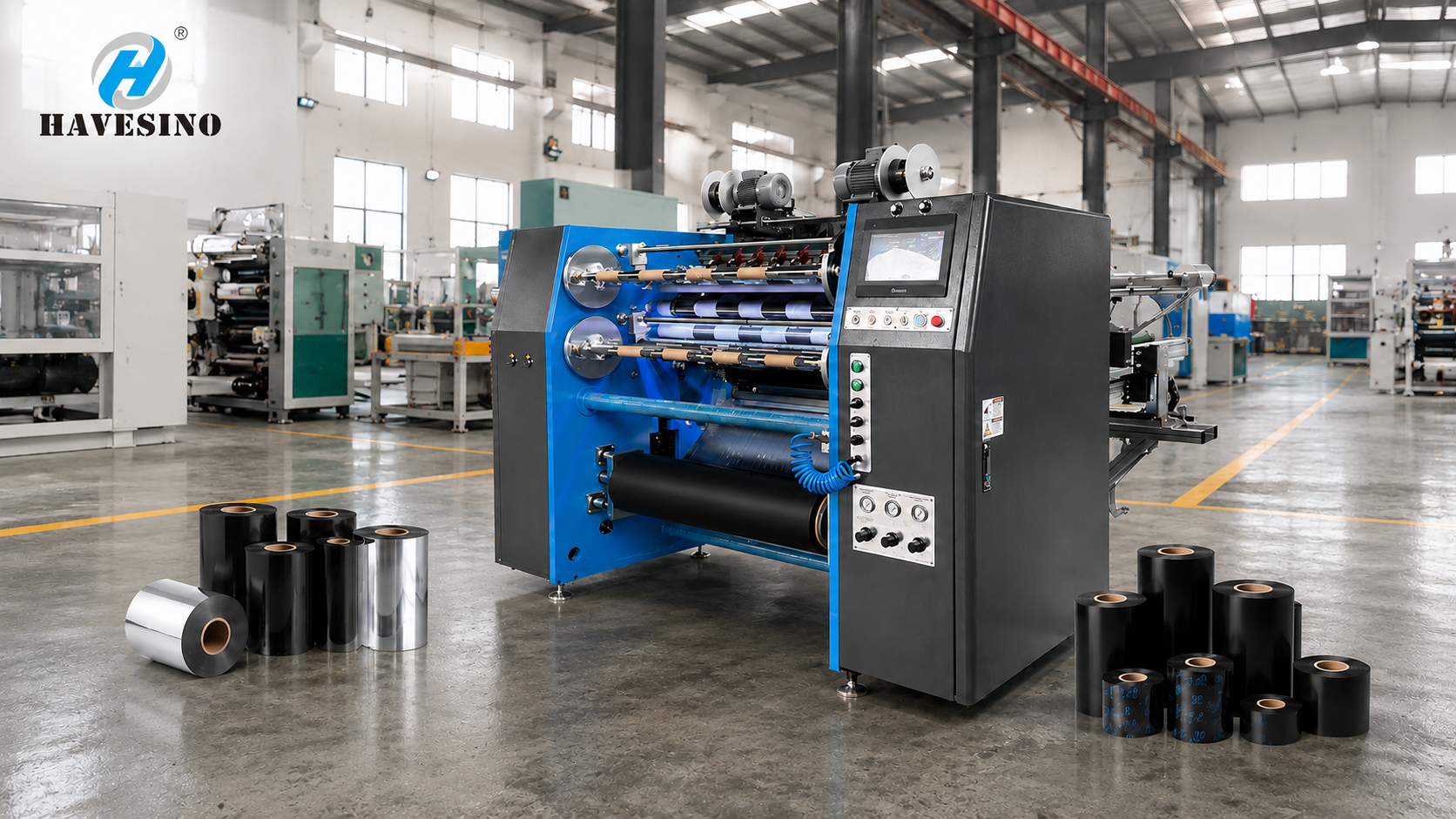
For converters looking to improve waste control, HAVESINO can recommend a thermal transfer ribbon slitter based on actual material type, mother roll size, finished ribbon width, core size, automation requirement, and production target. Models such as N2M TTR Slitting Machine and Fully Automatic TTR Slitter Rewinder N3M-AS can be considered depending on the final configuration and factory workflow.
HAVESINO Group focuses on practical slitting and rewinding solutions for flexible packaging, label, thermal transfer ribbon, hot stamping foil, POS paper roll, and related converting industries. With 16+ years of industry experience, service across 100+ countries and regions, and 2,000+ installed machines, HAVESINO understands that waste reduction depends on both machine design and real production habits.
A suitable HAVESINO TTR slitter can help customers build a more stable process by supporting clean slitting, controlled rewinding, efficient roll handling, and practical operation. The final machine recommendation should always be based on sample material, roll size, finished roll requirements, and the customer’s production plan.
Practical Operating Habits That Help Reduce Waste
- Record workable settings for each ribbon material and finished roll specification.
- Check blade condition before quality problems become visible.
- Keep rollers, shafts, and the web path clean to avoid scratches or dust.
- Train operators to make gradual adjustments instead of large sudden changes.
- Inspect early finished rolls before running a full production batch.
- Prepare cores, labels, packaging, and tools before starting the order.
- Review rejected rolls regularly and classify the root cause of waste.
These habits may look simple, but they are effective because thermal transfer ribbon slitting is a repeated production process. Small improvements in every batch can create meaningful material savings over time.
FAQ About Reducing Waste in Thermal Transfer Ribbon Slitting
What causes the most waste in thermal transfer ribbon slitting?
Common causes include unstable tension, poor blade condition, incorrect web alignment, unsuitable rewinding settings, and inconsistent operator procedures. The exact cause should be checked according to the material and finished roll defect.
Is higher slitting speed always better for reducing cost?
Not always. If higher speed creates more rejected rolls, downtime, or unstable rewinding, the real production cost may increase. A stable speed with consistent roll quality is often more valuable.
How can I reduce start-up waste when changing orders?
Prepare cores and tools in advance, record previous settings, confirm blade position, and inspect the first finished rolls before continuing full production.
Can one TTR slitter process different ribbon materials?
In many cases, one machine can be configured for different TTR materials, but the suitability depends on material type, roll size, finished width, and production requirements.
What information should I provide when choosing a TTR slitter?
You should provide material type, mother roll width, material thickness, core size, finished roll width, finished roll length or diameter, and your expected production capacity.
Conclusion: Reduce Waste Through a Stable Thermal Transfer Ribbon Slitting Process
Reducing waste in thermal transfer ribbon slitting requires more than one adjustment. It is the result of careful material preparation, clean blade setup, stable tension control, smooth rewinding, trained operators, and a suitable TTR slitter configuration. When these factors work together, converters can improve finished roll consistency, reduce rejected material, and build a more reliable production process.
Share your material type, roll size, finished ribbon requirements, and production target with Contact HAVESINO to discuss a suitable thermal transfer ribbon slitter configuration for your factory.



Leave A Comment