

 English
 German
 French
 Russian
 Spanish
 Japanese
 Korean
 Portuguese
 Ukrainian
 Arabic
 Italian
 Afrikaans
 Albanian
 Armenian
 Azerbaijani
 Basque
A thermal paper slitting machine is a key converting solution for manufacturers producing POS receipt rolls, cash register rolls, ATM paper rolls, and other narrow thermal paper products. The quality of the finished roll depends not only on cutting the paper to the correct width, but also on stable unwinding, controlled web tension, clean slitting, accurate rewinding, and consistent roll appearance. For converters serving retail, banking, hospitality, logistics, and ticketing markets, choosing the right machine can directly affect production stability, operator efficiency, and finished-roll quality.
HAVESINO Group focuses on slitting, rewinding, and converting equipment and has more than 16 years of industry experience. For thermal paper and POS roll production, the machine configuration should be selected according to the actual parent-roll size, paper characteristics, finished-roll dimensions, core requirements, automation expectations, and production target.
What Is a Thermal Paper Slitting Machine?
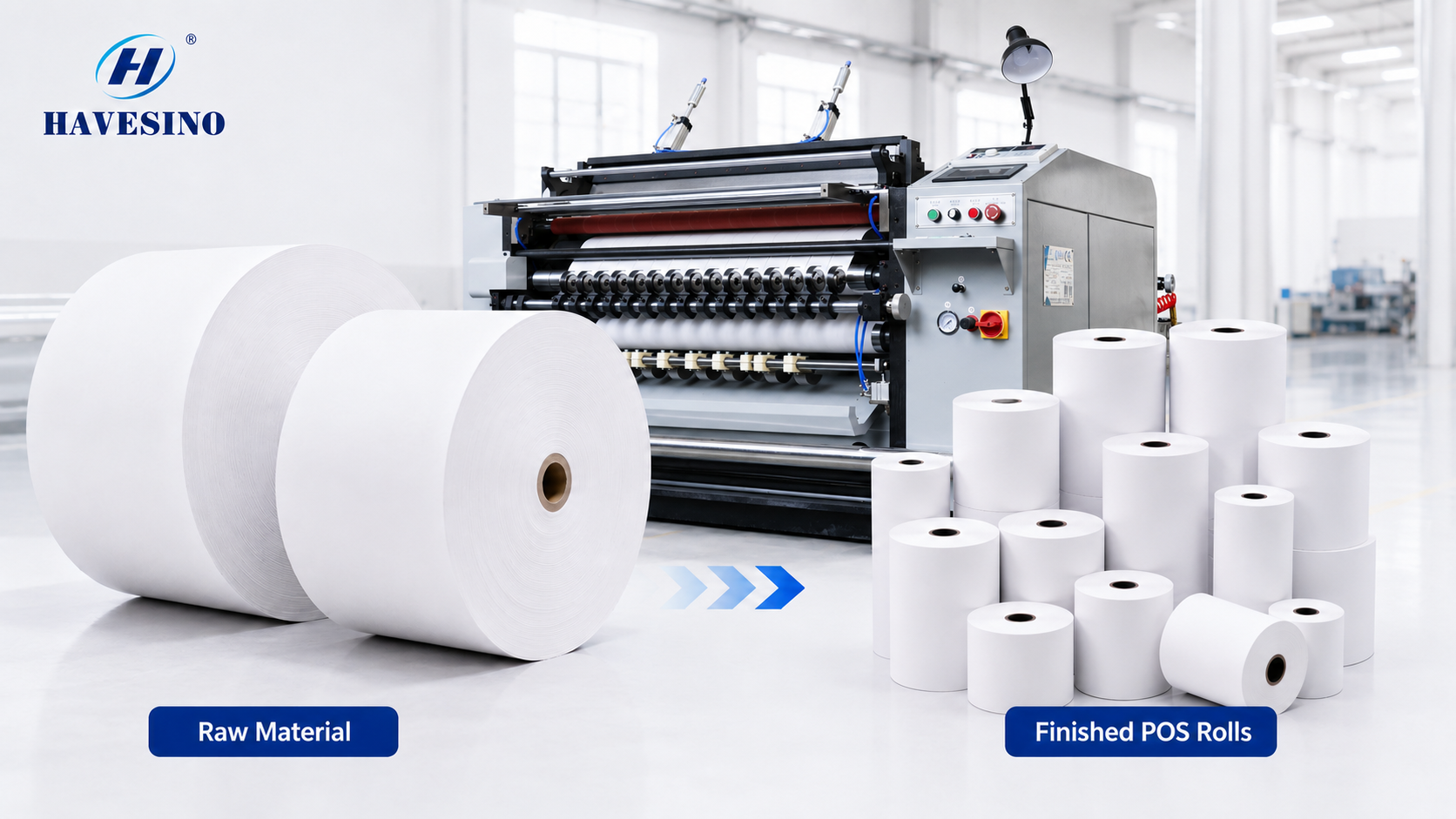
A thermal paper slitting machine converts a wider parent roll of thermal paper into multiple narrower finished rolls. The process normally includes unwinding the master roll, guiding and tensioning the web, slitting it into the required widths, rewinding the slit strips, and preparing the finished rolls for downstream handling or packaging.
For POS roll production, the machine must handle lightweight paper with care. Excessive tension can deform the roll or create uneven winding, while insufficient tension can lead to loose rolls, telescoping, or poor edge quality. A practical thermal paper slitter rewinder therefore needs to balance web control, blade setup, rewinding pressure, and operator convenience throughout the converting process.
Why POS Roll Production Needs Stable Slitting and Rewinding
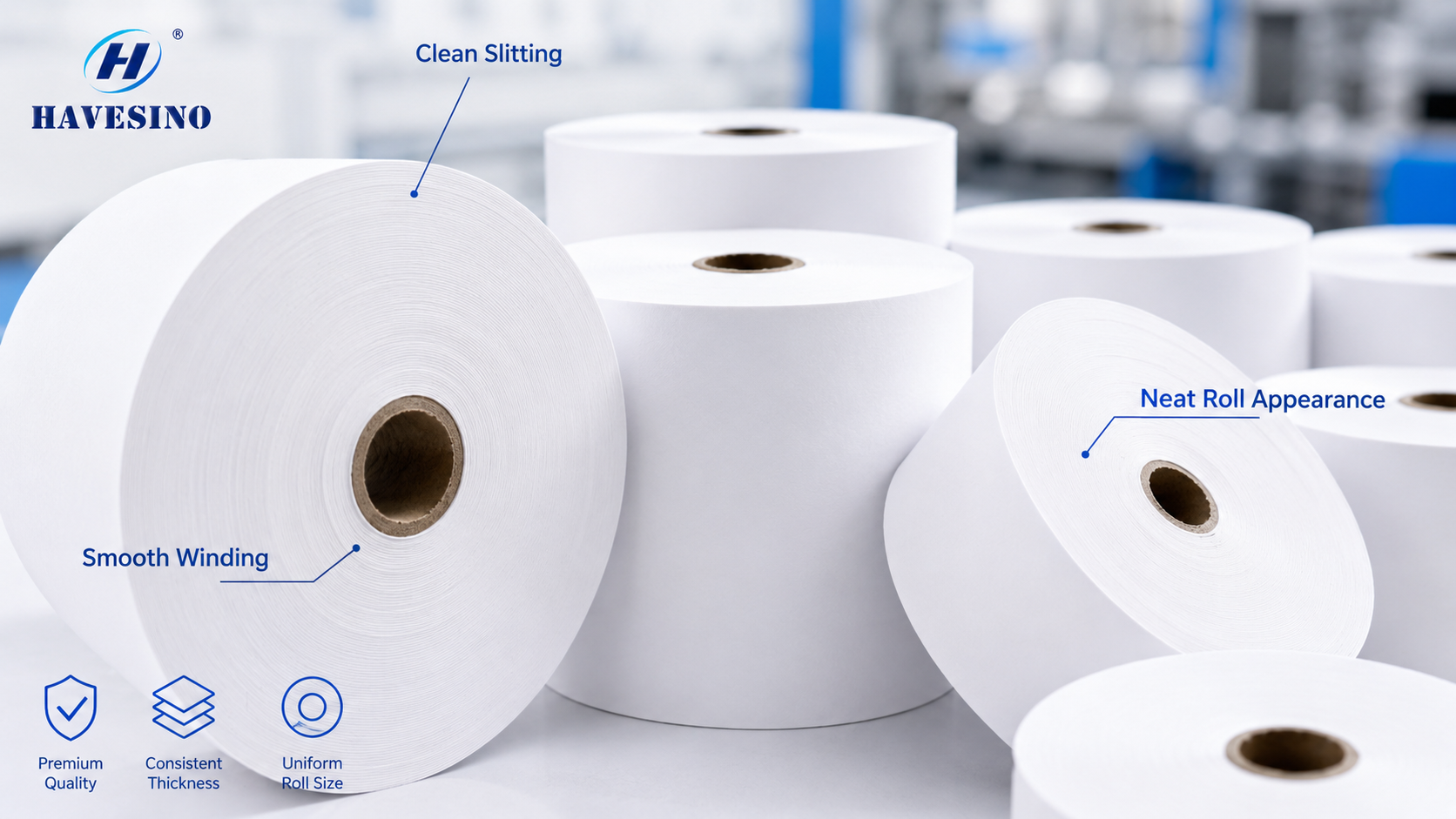
POS rolls may look simple, but consistent production requires close control of several details. Finished rolls should have clean edges, stable winding, reasonable roll hardness, and a neat appearance. Variations in parent-roll quality, paper coating, humidity, core type, and roll diameter can all influence the result.
A well-matched POS roll slitter rewinder helps manufacturers reduce avoidable handling problems and maintain more consistent output. The goal is not simply to run faster; it is to keep the web stable through acceleration, continuous production, roll change, and rewinding. For many buyers, repeatable quality and practical operation are more important than pursuing the highest possible nominal speed.
Key Machine Sections in a Thermal Paper Slitting Machine
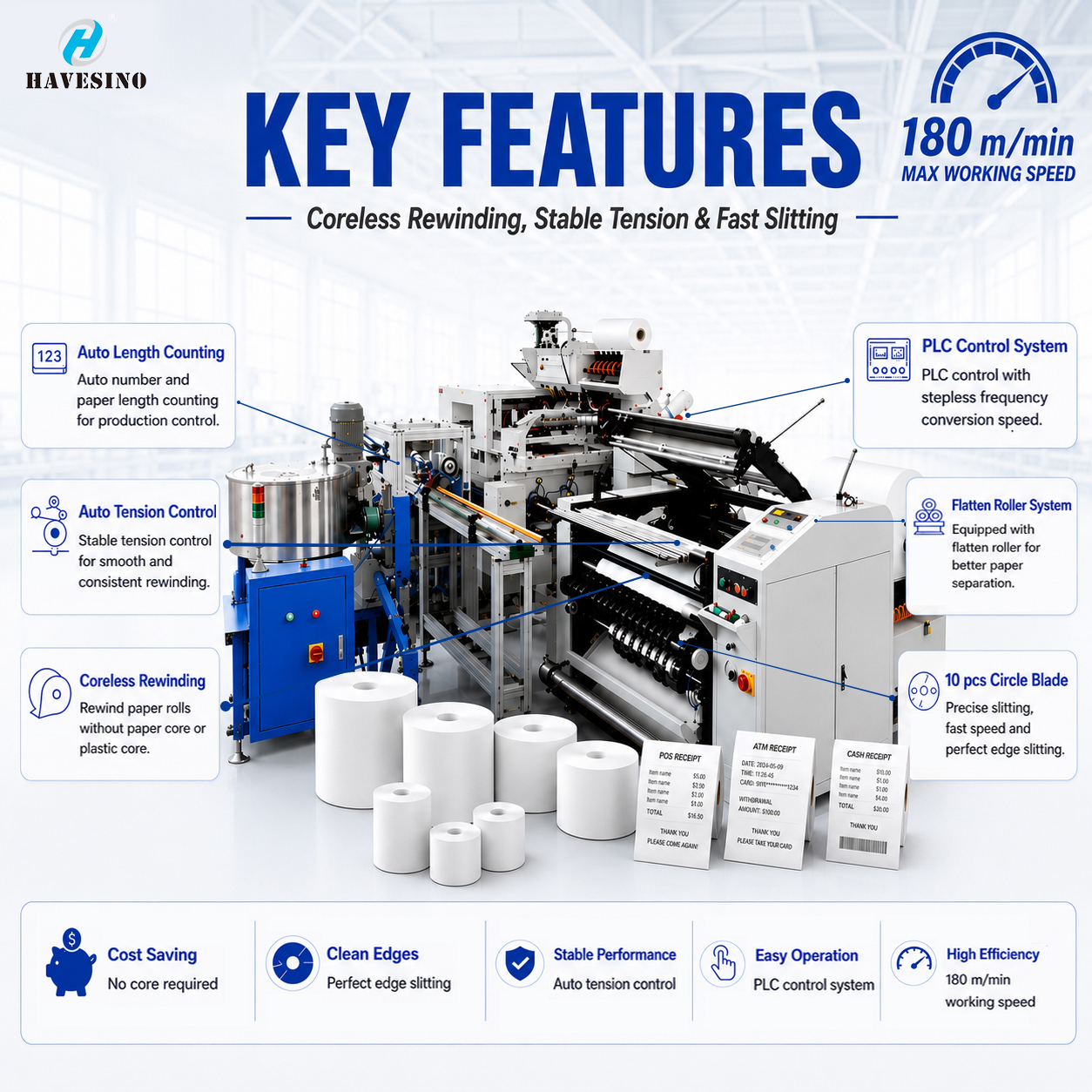
The following machine sections are especially important in POS paper roll production:
• Unwinding section: Supports the parent roll and feeds the thermal paper into the machine. Stable unwinding helps prevent sudden tension changes.
• Web guiding and tension control: Keeps the web aligned and supports consistent tension as the parent-roll diameter changes.
• Slitting section: Cuts the paper into the required finished widths. Blade selection and setup depend on the paper and production requirements.
• Rewinding section: Forms the slit strips into finished POS rolls. Smooth rewinding is important for roll shape and winding consistency.
• Roll handling and automation: Depending on the final configuration, automation can reduce repetitive manual work and improve production flow.
These sections should work as one integrated system. A strong slitting unit alone cannot compensate for unstable unwinding or poorly controlled rewinding.
Key Production Factors to Evaluate Before Choosing a POS Paper Roll Slitter
Before selecting a thermal paper slitting machine, buyers should define the actual converting job rather than compare machines only by appearance or headline speed.
The table below summarizes the most important information to prepare:
Factor | Why It Matters |
Parent-roll width and diameter | Determines the basic machine size and unwind requirements. |
Thermal paper type | Different paper characteristics can affect tension, slitting, and rewinding behavior. |
Finished-roll width | Defines the slit layout and number of rolls produced across the web. |
Finished-roll diameter or length | Influences rewinding setup and roll handling. |
Core type and size | Important for standard core, special core, or coreless applications. |
Production target | Helps determine the appropriate automation level and workflow. |
Special requirements | Examples include inline printing, coreless rolls, or downstream handling needs. |
How to Choose a Thermal Paper Slitting Machine for POS Roll Production
Start with the material and finished product. Share the parent-roll width and diameter, paper type, paper basis weight if available, finished-roll width, finished-roll diameter, core type, and expected production volume. These details help determine the required machine structure and level of automation.
Next, consider how the machine will fit into the factory workflow. A manufacturer producing many small POS rolls may prioritize efficient roll handling and reduced operator intervention. A converter with frequent product changes may place more value on setup convenience and flexible adjustment. Where printing, coreless rolls, or special downstream handling is required, the machine configuration should be discussed separately.
Finally, evaluate supplier experience and application support. Thermal paper converting involves practical details that are not always visible in a quotation. A supplier should be able to discuss material behavior, roll specifications, operation, testing, and the information needed before final configuration.
Recommended HAVESINO Solution
For POS receipt roll production, HAVESINO can recommend a suitable thermal paper slitting solution based on the customer's actual material and finished-roll requirements. The product range includes thermal paper and POS paper slitting equipment, including automatic paper roll slitting machine solutions such as the CP-S1100FA, as well as other configurations for applications involving inline printing or coreless thermal paper rolls.
The final machine selection depends on the parent-roll dimensions, finished-roll size, core requirement, production target, and automation level. HAVESINO does not recommend choosing a machine only by model name. A better approach is to match the equipment structure to the real production process.
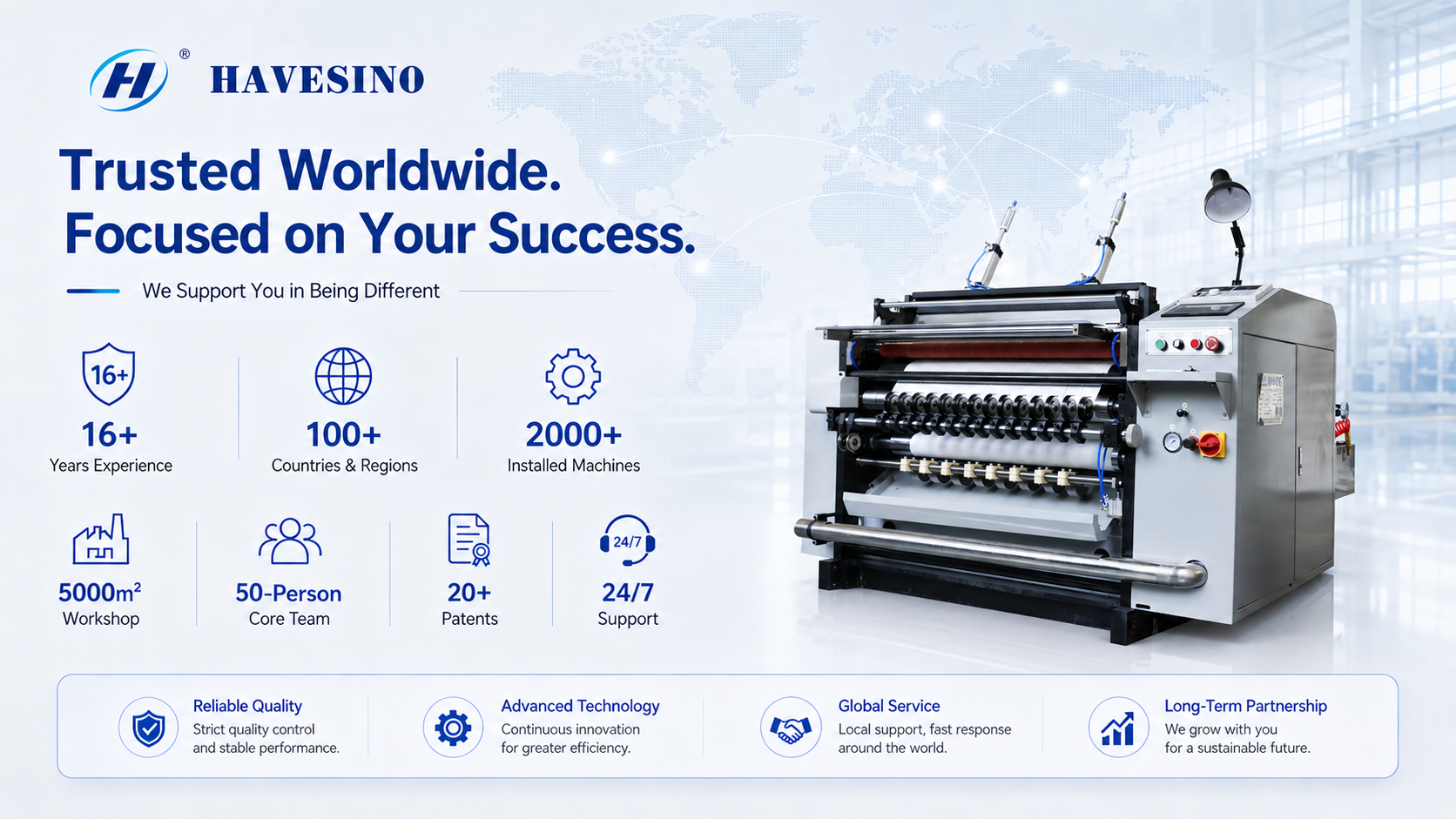
With more than 16 years of experience in slitting and rewinding equipment, HAVESINO Group serves customers across more than 100 countries and regions and has over 2,000 installed machines. The company's focus is on stable tension control, clean slitting, smooth finished rolls, practical operation, and reliable rewinding solutions for different converting applications.
Common Problems and Practical Considerations
Several common problems can appear in thermal paper converting if machine settings, materials, or process conditions are not well matched:
• Uneven roll hardness: May be related to unstable tension, rewinding pressure, or inconsistent material behavior.
• Telescoping rolls: Can result from poor alignment, uneven tension, or unsuitable rewinding settings.
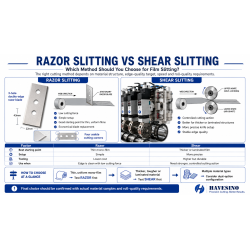
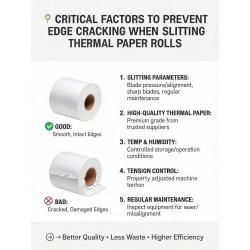
• Rough or dusty edges: Blade condition, blade setup, paper characteristics, and slitting method should be checked.
• Loose finished rolls: Rewinding tension and roll-building settings may need adjustment.
• Frequent setup delays: The production mix and changeover requirements should be considered when selecting the machine configuration.
These issues should be evaluated systematically. In many cases, stable production depends on the combined effect of machine design, correct setup, material quality, and operator practice rather than one single factor.
FAQ: Thermal Paper Slitting Machine for POS Roll Production
Q1. What products can a thermal paper slitting machine produce?
A thermal paper slitting machine can be used for POS receipt rolls, cash register rolls, ATM paper rolls, ticket rolls, and other narrow thermal paper products, depending on the machine configuration and finished-roll requirements.
Q2. What information should I provide before choosing a POS roll slitter rewinder?
Share the parent-roll width and diameter, thermal paper type, finished-roll width and diameter, core type, production target, and any special automation or printing requirements.
Q3. Is higher machine speed always better for POS roll production?
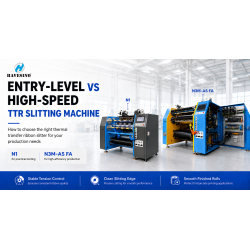
Not necessarily. Stable tension, clean slitting, smooth rewinding, reliable roll handling, and suitability for the actual production process are equally important. The right operating speed depends on material, roll specifications, and machine configuration.
Q4. Can one machine produce different POS roll sizes?
In many cases, a thermal paper slitter rewinder can be configured for different finished-roll sizes within its design range. The exact flexibility depends on the slitting setup, rewinding structure, core requirements, and final machine configuration.
Q5. Can HAVESINO provide automatic or coreless thermal paper slitting solutions?
Yes. HAVESINO's product range includes automatic paper roll slitting solutions and configurations for coreless thermal paper applications. The suitable model should be selected according to actual roll size and production needs.
Q6. How should buyers test a thermal paper slitting machine before delivery?
Where possible, buyers should provide representative production material and finished-roll requirements for trial running. This helps confirm the slitting, rewinding, roll appearance, and operating process before shipment.
Conclusion
A thermal paper slitting machine for POS roll production should be selected around real material behavior, finished-roll specifications, production workflow, and automation needs. Clean slitting, stable web control, smooth rewinding, and practical roll handling all contribute to consistent output.
HAVESINO provides thermal paper and POS paper slitting solutions for different converting requirements. Share your material type, parent-roll size, finished-roll dimensions, core requirement, and production target with HAVESINO to discuss a suitable machine configuration. Contact HAVESINO to discuss your thermal paper slitting and POS roll production requirements.


Leave A Comment