

 English
 German
 French
 Russian
 Spanish
 Japanese
 Korean
 Portuguese
 Ukrainian
 Arabic
 Italian
 Afrikaans
 Albanian
 Armenian
 Azerbaijani
 Basque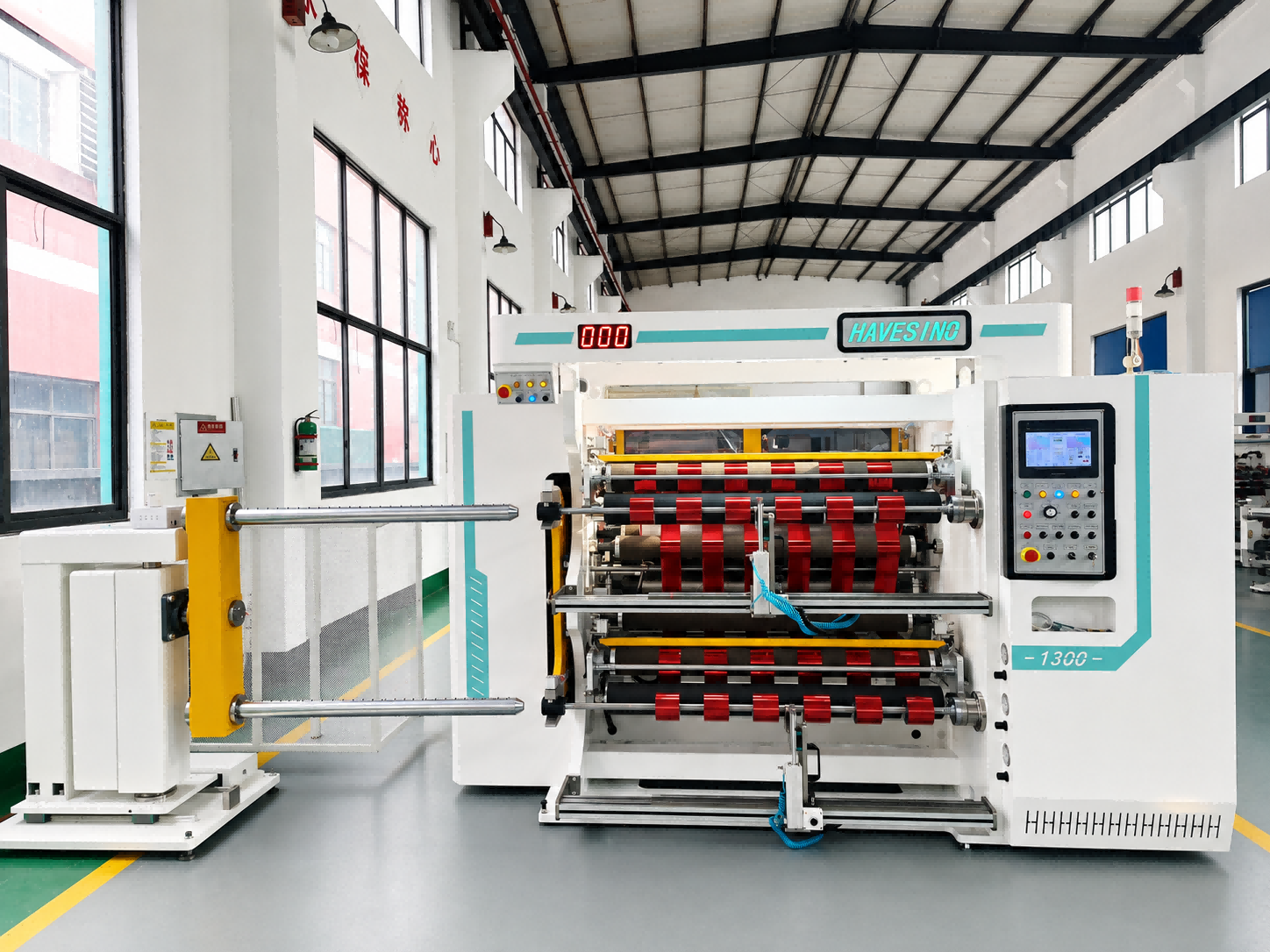
Hot stamping foil is widely used for decorative and functional finishes on packaging, labels, cards, textiles and other converted products. Before the foil reaches a stamping or printing process, wide parent rolls often need to be converted into narrower, accurately wound rolls. A professional hot stamping foil slitting machine helps control edge quality, web tension and roll formation so converters can produce clean, stable and burr-free finished rolls.
For buyers, the machine choice should not be based on speed alone. Hot stamping foil can be sensitive to uneven tension, unsuitable blade selection, shaft vibration, dust and poor rewinding control. These issues may lead to rough edges, telescoping, wrinkles, loose rolls or inconsistent widths. The practical objective is a balanced slitting and rewinding process that protects the foil surface while maintaining repeatable roll quality.
What Is a Hot Stamping Foil Slitting Machine?
A hot stamping foil slitting machine is a roll-to-roll converting system that unwinds a wide foil roll, separates it into multiple narrower webs and rewinds those webs into finished rolls. The machine normally includes an unwinding section, web guiding, tension control, slitting units, rewinding shafts and an operator control system.
The equipment is also commonly described as a hot stamping foil slitter rewinder, hot foil slitting machine or foil roll slitting machine. Although these terms may vary, the main production purpose is the same: to convert master rolls into narrower rolls with controlled width, clean edges and stable winding quality.
Why Hot Stamping Foil Needs Clean, Burr-Free Slitting
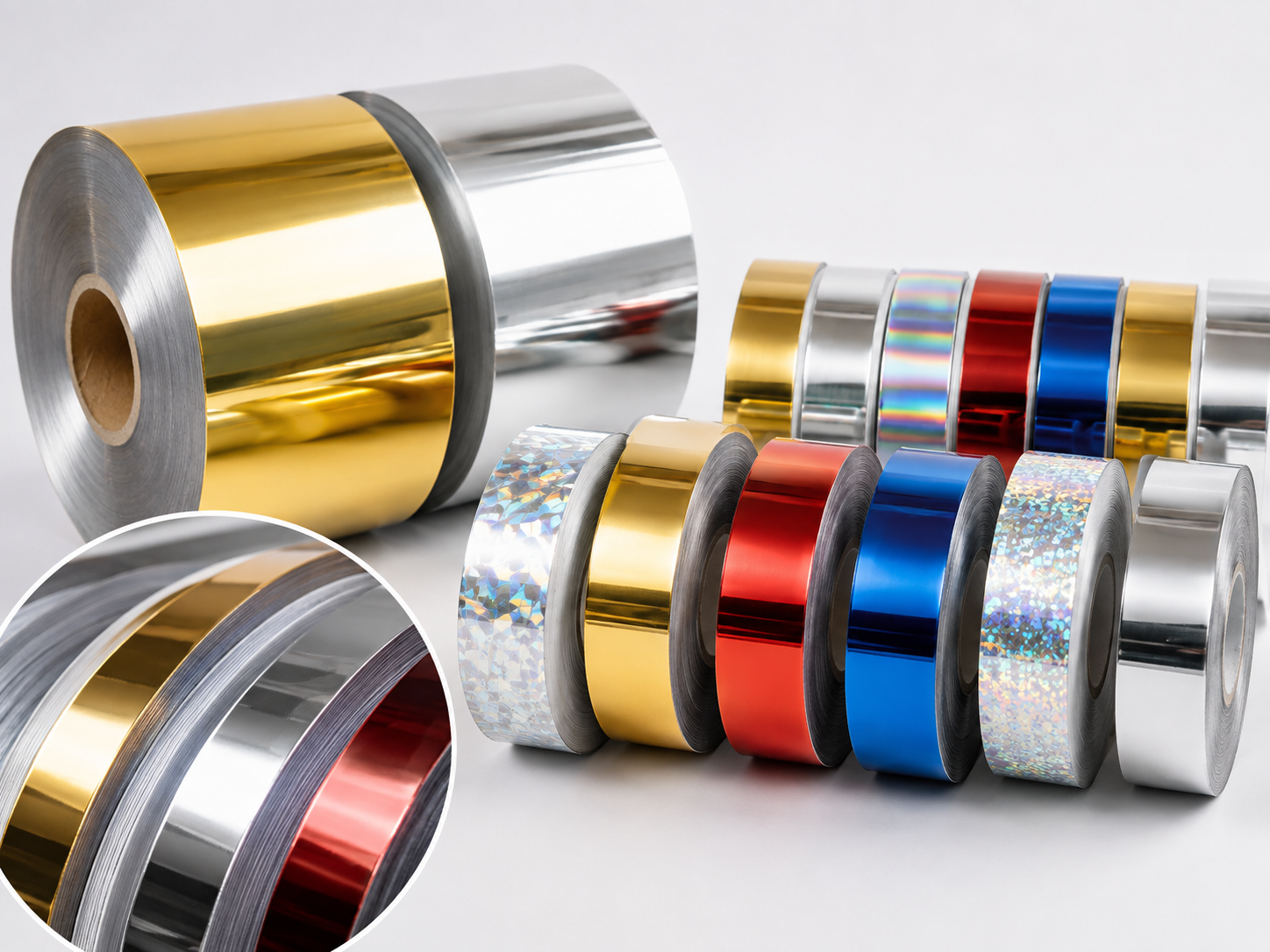
Hot stamping foil is typically a multilayer material. Its structure and surface finish make edge damage more visible and more disruptive in downstream processing. A rough or burred edge can create loose particles, affect web tracking and reduce the stability of stamping or printing operations. Poorly wound rolls may also develop edge steps, wrinkles or telescoping during storage and transport.
Burr-free slitting depends on the complete process rather than one component. Blade condition, blade alignment, material support, web tension and rewinding pressure must work together. A machine with stable mechanical construction and responsive tension control gives operators a better foundation for maintaining consistent results across different roll sizes and production requirements.
Key Machine Sections for Clean Foil Slitting
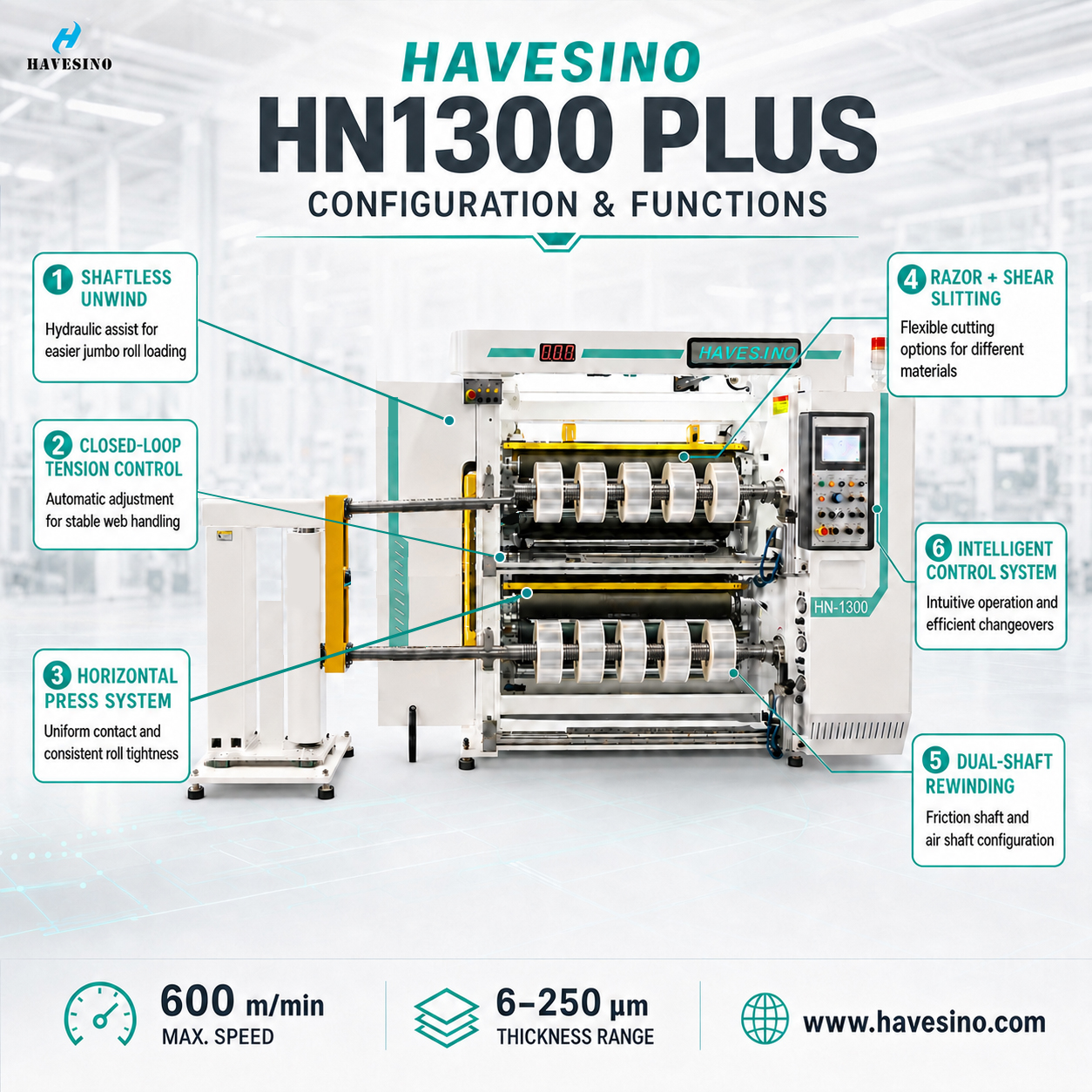
Machine Section | Primary Function | Why It Matters for Roll Quality |
Unwinding and tension control | Feeds the parent roll at controlled tension | Reduces sudden tension changes, wrinkles and web stretching |
Web guiding system | Keeps the foil aligned before slitting | Supports consistent slit width and stable edge position |
Slitting unit | Separates the web into narrower strips | Blade selection and alignment directly influence edge cleanliness |
Rewinding shafts | Build finished rolls under controlled tension | Helps prevent loose winding, telescoping and uneven roll hardness |
Control system | Coordinates speed, tension and operating settings | Improves repeatability when changing materials or finished roll sizes |
For practical production, operators should also pay attention to roll loading, core quality, shaft condition and cleanliness around the slitting area. Even a well-designed foil slitting machine requires correct setup and routine blade maintenance to achieve reliable finished rolls.
How to Reduce Burrs During Hot Stamping Foil Slitting
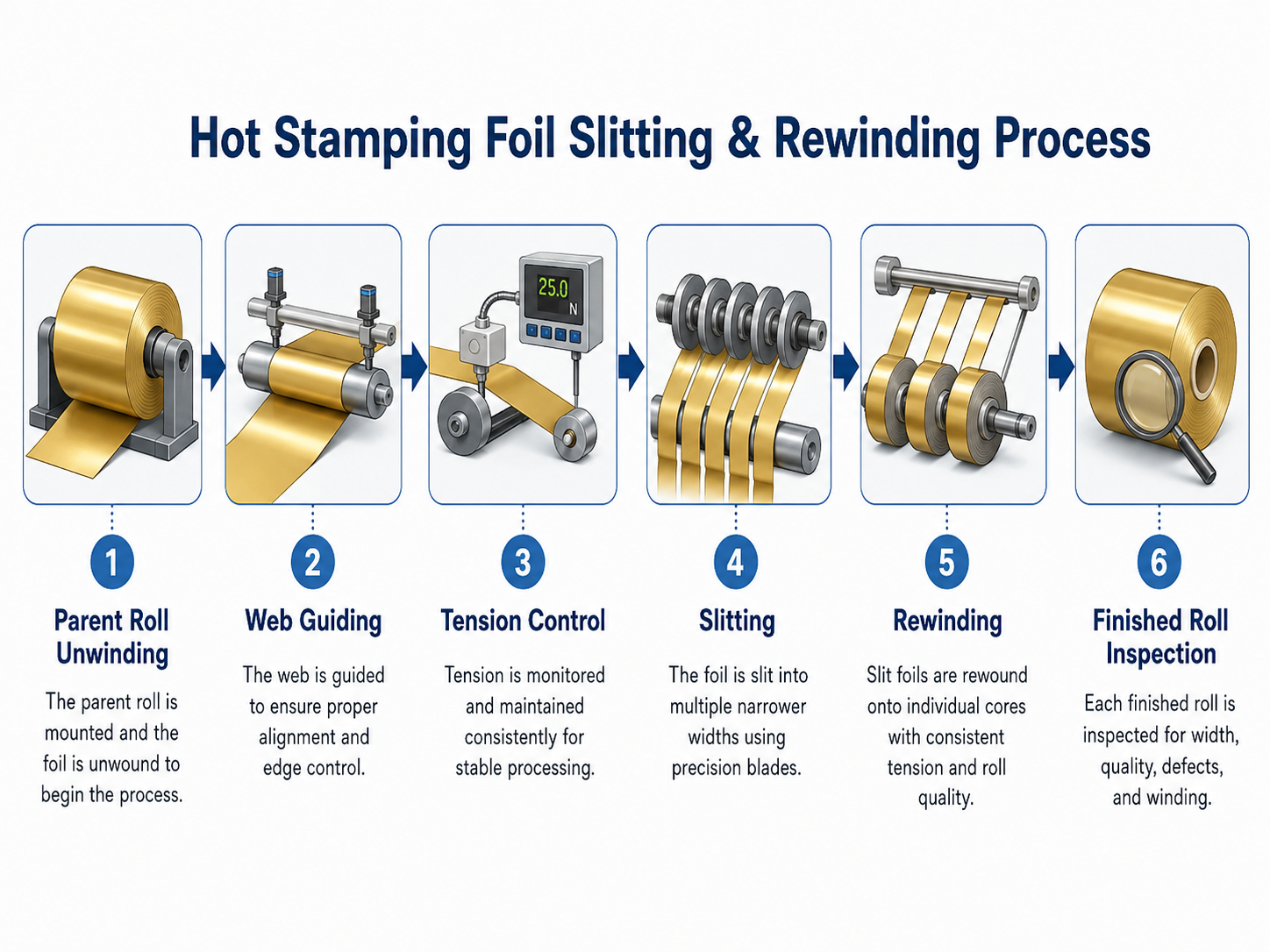
The first step is to match the slitting method and blade condition to the actual foil structure. Dull, damaged or incorrectly installed blades can tear or deform the edge instead of producing a clean cut. Blade overlap, clearance and alignment should be checked according to the selected slitting method and the material being processed.
The second step is stable web handling. Excessive or fluctuating tension can stretch the foil, while insufficient tension may cause wandering, wrinkles or unstable contact at the slitting point. Rewinding tension should also be adjusted as the finished roll diameter increases. This helps maintain suitable roll hardness without crushing the core or creating overly tight edges.
Finally, the slitting area should remain clean. Foil dust and small particles can affect cutting quality and contaminate finished rolls. Regular inspection of blades, rollers, shafts and guides supports more consistent operation and reduces avoidable quality problems.
How to Choose a Hot Stamping Foil Slitter Rewinder
A suitable machine should be selected according to the material type, parent roll size, finished roll width, core specification, required roll quality and production target. Buyers should provide representative material samples whenever possible, because different foil structures may respond differently to the same slitting setup.
- Confirm the exact foil type and layer structure.
- Provide parent roll width, roll diameter and core size.
- Define the narrowest and most common finished roll widths.
- Specify finished roll diameter, core size and winding direction.
- Explain the expected production volume and changeover frequency.
- Share any recurring quality problems, such as burrs, wrinkles, telescoping or loose winding.
- Arrange a material trial before shipment when practical.
Higher operating speed is not always the best answer. A machine should reach the required output while maintaining stable tension, accurate web tracking and acceptable edge quality. The final configuration should therefore be based on actual material and production requirements rather than a single headline specification.
Recommended HAVESINO Solution
For hot stamping and cold foil converting, HAVESINO provides hot stamping foil slitter solutions that can be configured according to the material type, parent roll size and finished roll requirements. The HN800HSF Plus is a relevant hot stamping foil slitter rewinder option for buyers evaluating clean slitting, stable tension control and smooth rewinding.
The recommended machine structure and slitting setup depend on the actual foil, target widths and winding requirements. HAVESINO can review material samples and production information before suggesting a configuration. This approach is more reliable than selecting equipment only from a general machine description.
With more than 16 years of industry development, HAVESINO Group focuses on slitting, rewinding and converting equipment for global customers. Machine testing with customer material can be arranged when applicable, helping confirm the setup before delivery.
Common Problems and Practical Considerations
Edge burrs are often connected with blade wear, blade position or an unsuitable slitting setup. Telescoping is more commonly related to uneven tension, poor alignment or inconsistent rewinding pressure. Wrinkles may result from web path problems, roller condition, uneven tension or an unstable parent roll. Loose finished rolls can indicate insufficient rewinding tension or incorrect taper settings.
Because several variables interact, troubleshooting should follow a systematic sequence. Operators should first confirm the material and roll condition, then inspect blade setup, web alignment, tension settings and rewinding pressure. Changing several settings at the same time makes it difficult to identify the real cause.
FAQ
What materials can a hot stamping foil slitting machine process?
It is designed for hot stamping foil and may also be configured for related foil materials depending on their structure and production requirements. The material should be confirmed before final machine selection.
How can a slitter rewinder produce burr-free foil rolls?
Clean edges require suitable blades, correct alignment, stable material support, controlled web tension and consistent rewinding. Regular blade inspection and machine cleaning are also important.
Is higher slitting speed always better?
No. The useful operating speed is the speed at which the machine can maintain acceptable edge quality, stable tension and smooth finished rolls for the actual material.
Can one machine process different foil widths?
Yes, a machine can normally be configured for multiple finished widths within its applicable range. Blade arrangement, spacer setup, core size and rewinding configuration must match each job.
What information should buyers provide before requesting a machine recommendation?
Buyers should provide the foil type, parent roll width and diameter, material thickness if available, core sizes, finished roll widths and diameters, winding direction, production target and current quality concerns.
Should buyers test their own foil before shipment?
A material trial is recommended when practical. It allows the supplier and buyer to review slitting quality, winding condition and operating settings using representative production material.
Conclusion
A hot stamping foil slitting machine for burr-free rolls should combine clean cutting with stable tension control, accurate web handling and smooth rewinding. Buyers should evaluate the complete converting process, not only nominal speed or machine appearance. Correct material information and realistic production requirements are essential for selecting a suitable foil slitter rewinder.
Share your foil type, parent roll size, finished roll width and production target with HAVESINO. Contact HAVESINO to discuss a suitable hot stamping foil slitting machine configuration.
.png?x-oss-process=image/resize,m_pad,h_250,w_250)


Leave A Comment