

 English
 German
 French
 Russian
 Spanish
 Japanese
 Korean
 Portuguese
 Ukrainian
 Arabic
 Italian
 Afrikaans
 Albanian
 Armenian
 Azerbaijani
 Basque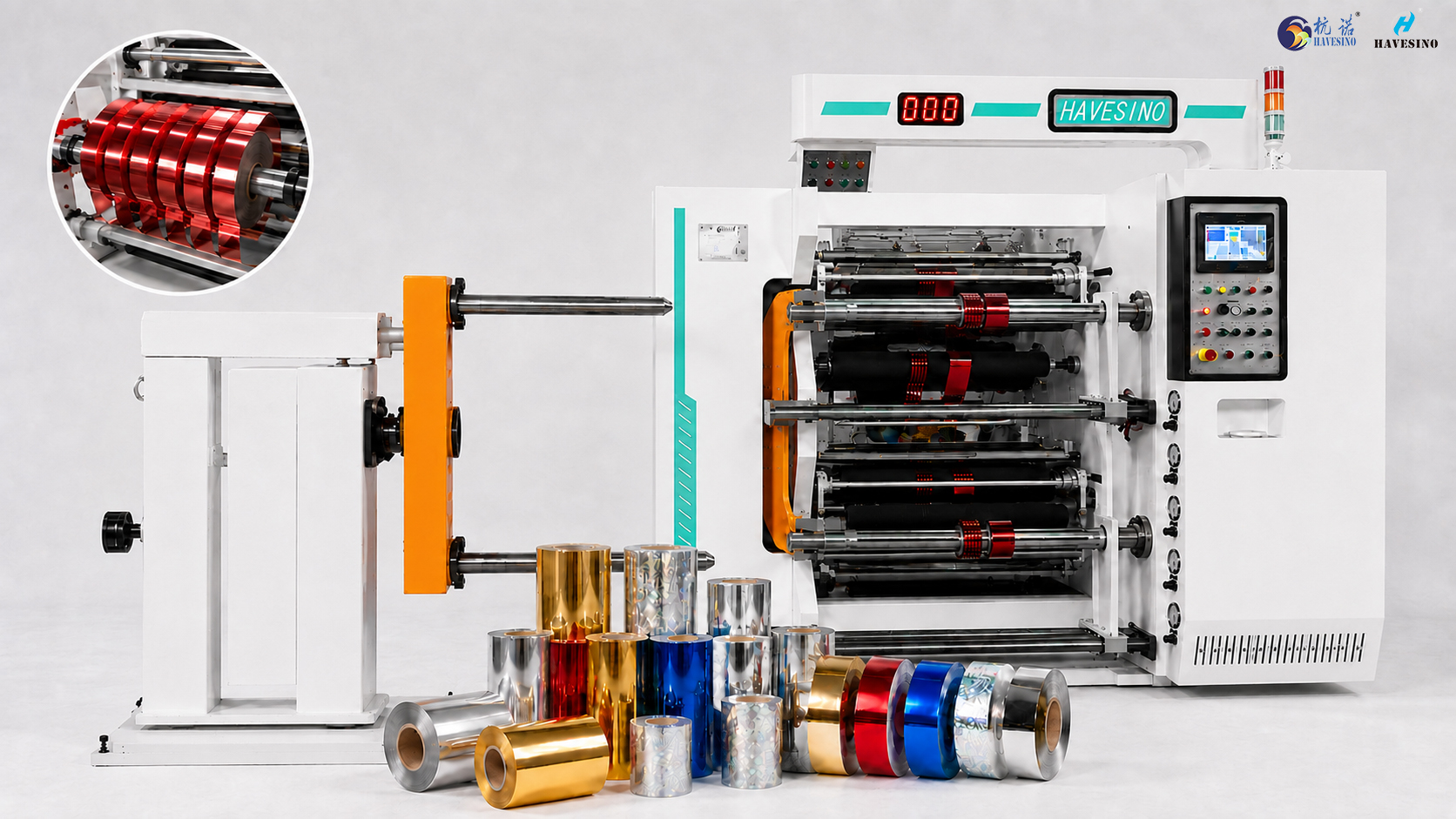
Choosing the right hot stamping foil slitter rewinder is not only a question of machine speed. Hot stamping foil is a value-added material that needs clean slitting, stable web handling, controlled tension, and consistent rewinding. If the machine does not match the material and finished-roll requirements, converters may face wrinkles, uneven roll edges, telescoping, loose or overly tight rolls, and unnecessary material loss.
For buyers, the practical approach is to start with the foil structure, jumbo roll dimensions, finished roll specifications, production target, and quality expectations. This guide explains the main points to evaluate before selecting a hot stamping foil slitter rewinder for regular production.
What Is a Hot Stamping Foil Slitter Rewinder?
A hot stamping foil slitter rewinder converts a wider parent roll into multiple narrower finished rolls. During the process, the material is unwound, guided through the machine, slit to the required widths, and rewound onto individual cores or shafts.
Although the basic principle is similar to other roll-to-roll converting equipment, hot stamping foil requires careful control because the finished surface and roll condition directly affect downstream stamping performance and customer acceptance. A professional hot stamping foil slitter should therefore be evaluated as a complete web-handling system rather than only as a cutting unit.
Why Hot Stamping Foil Needs Stable Slitting and Rewinding
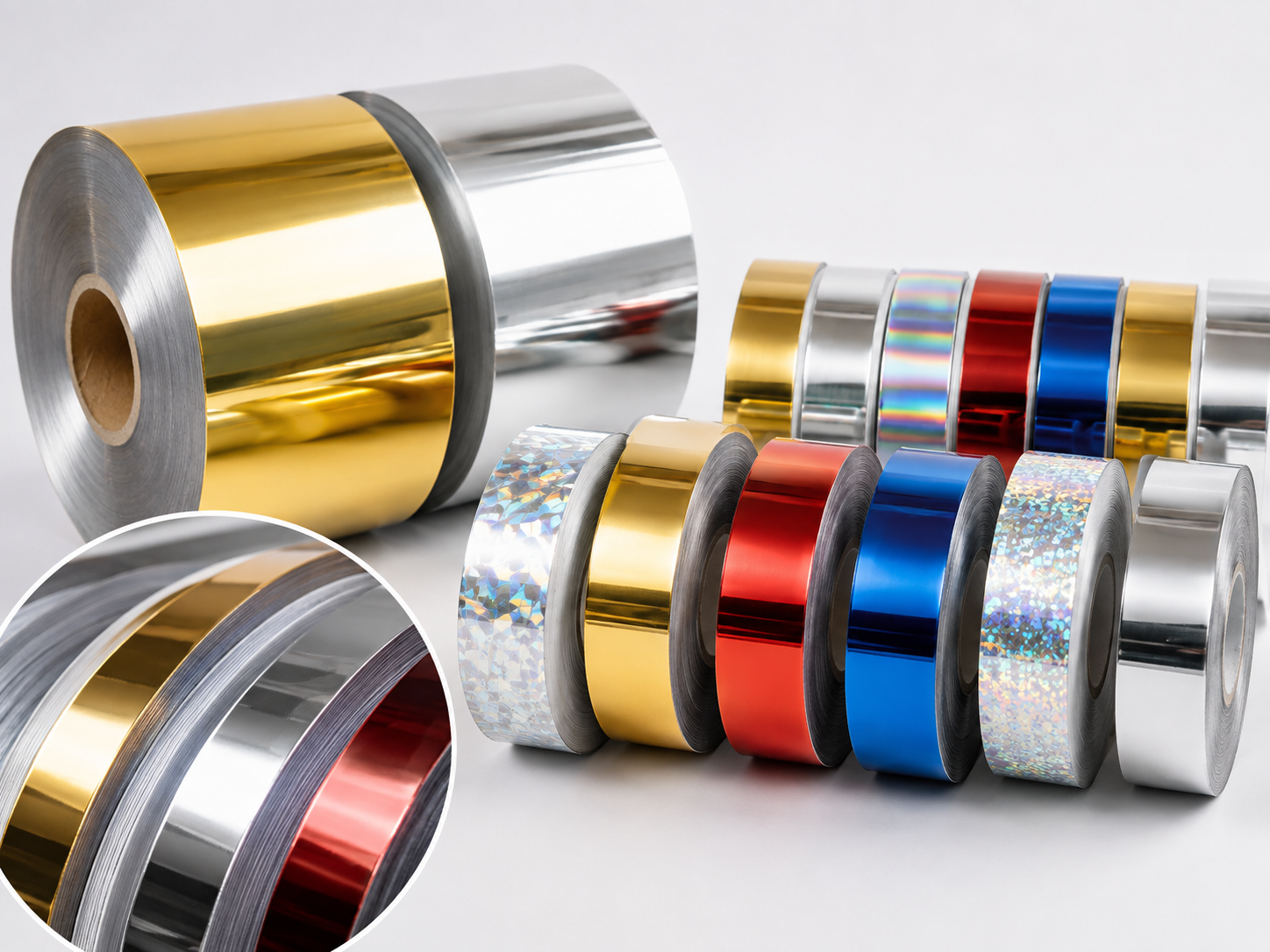
Hot stamping foil can be sensitive to tension variation, surface damage, edge defects, and poor winding conditions. A slitting line must keep the web running smoothly while controlling the forces applied from unwinding to rewinding.
Stable tension helps reduce wrinkles and roll deformation. Accurate web guiding supports consistent slit positioning. A suitable slitting arrangement helps produce clean edges, while balanced rewinding helps finished rolls maintain a neat, stable structure. For narrow rolls, winding consistency is especially important because tension differences can become more visible as the roll builds.
Cleanliness and material protection also matter. Dust, scratches, or unnecessary contact with sensitive surfaces can affect finished-roll quality, so the web path, roller condition, and cleaning access deserve attention.
Key Machine Sections to Evaluate
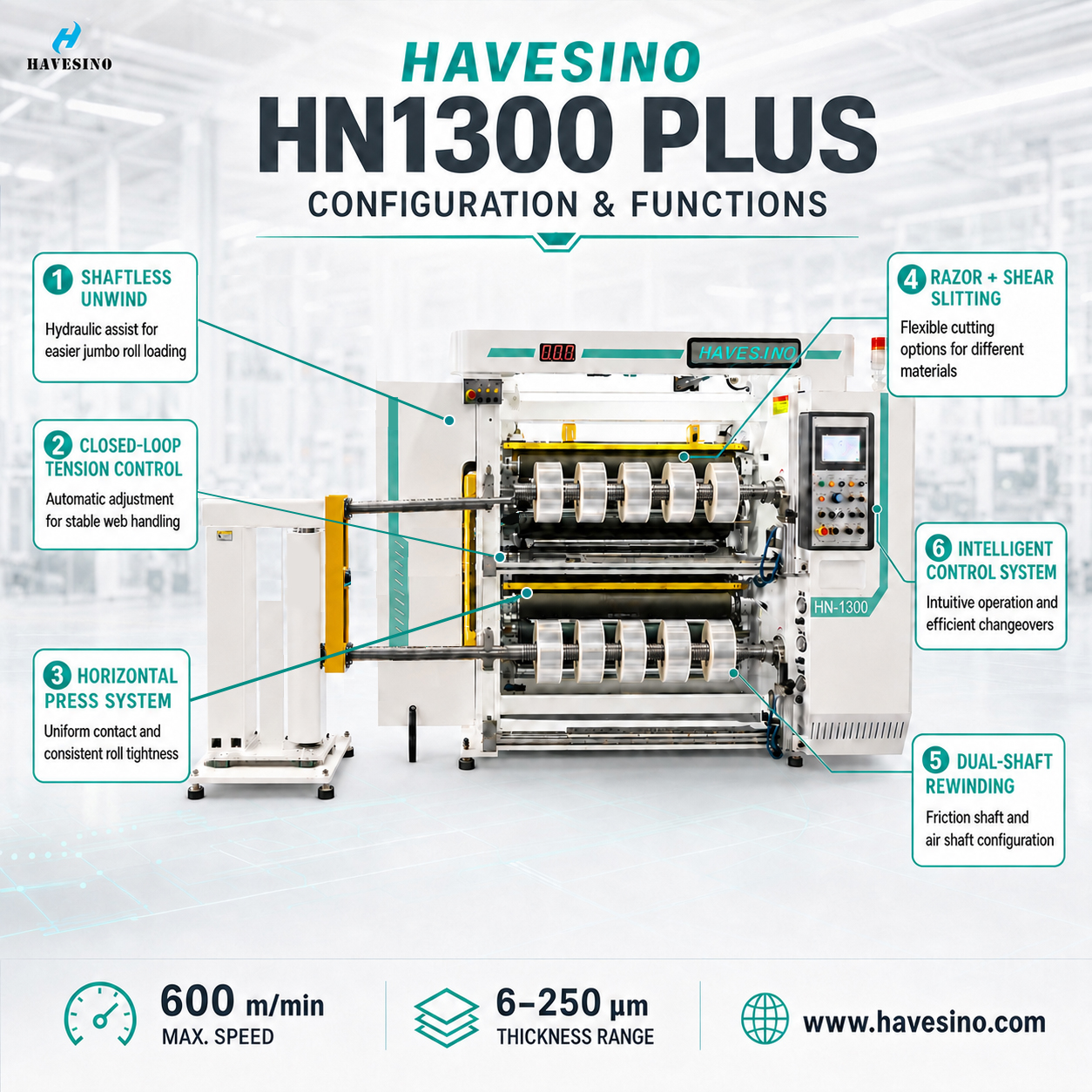
Machine Section | What to Check | Why It Matters |
Unwinding & tension control | Stable web release, controllable tension, smooth acceleration and deceleration | Helps reduce wrinkles, tension fluctuation, and unstable web movement |
Web guiding | Reliable web alignment and suitable guiding response | Supports consistent slit position and cleaner finished roll edges |
Slitting section | Slitting method and knife arrangement suitable for the foil and required widths | Influences edge quality, slit accuracy, setup efficiency, and material condition |
Rewinding section | Suitable shaft/core arrangement, controlled winding tension, stable roll build | Helps produce smooth, compact, and consistent finished rolls |
Control & operation | Clear controls, repeatable settings, practical setup procedures | Reduces operator variation and supports more consistent production |
Web path & cleaning access | Smooth rollers, protected material path, convenient cleaning and inspection | Helps reduce scratches, dust contamination, and maintenance difficulty |
How to Choose a Hot Stamping Foil Slitter Rewinder for Your Production
The best machine is the one configured around your actual converting task. Before comparing suppliers, prepare a clear specification sheet covering the material and the finished rolls you need to produce.
- Material type and structure: identify the hot stamping foil construction and any surface sensitivity that may affect web handling.
- Jumbo roll dimensions: provide the parent roll width, diameter, core size, and roll condition.
- Finished roll specifications: define the required slit widths, finished roll diameter, core size, and number of lanes.
- Production target: explain the expected output, changeover frequency, and whether short runs or longer continuous jobs are more common.
- Tension and winding quality: describe any current problems such as wrinkles, telescoping, loose winding, hard winding, or uneven roll faces.
- Slitting quality expectations: clarify acceptable edge quality and whether the application involves especially narrow finished rolls.
- Automation needs: consider operator workload, setup frequency, material loading, and the level of process consistency required.
- Future materials: if the machine may process hot stamping foil, cold foil, or other compatible materials, discuss this before finalizing the configuration.
A useful comparison should therefore look at the complete process: material handling, setup, slitting quality, winding stability, operator workflow, maintenance access, and the supplier’s ability to understand the actual application. Maximum speed should be treated as one selection factor, not the only selection factor.
Recommended HAVESINO Solution
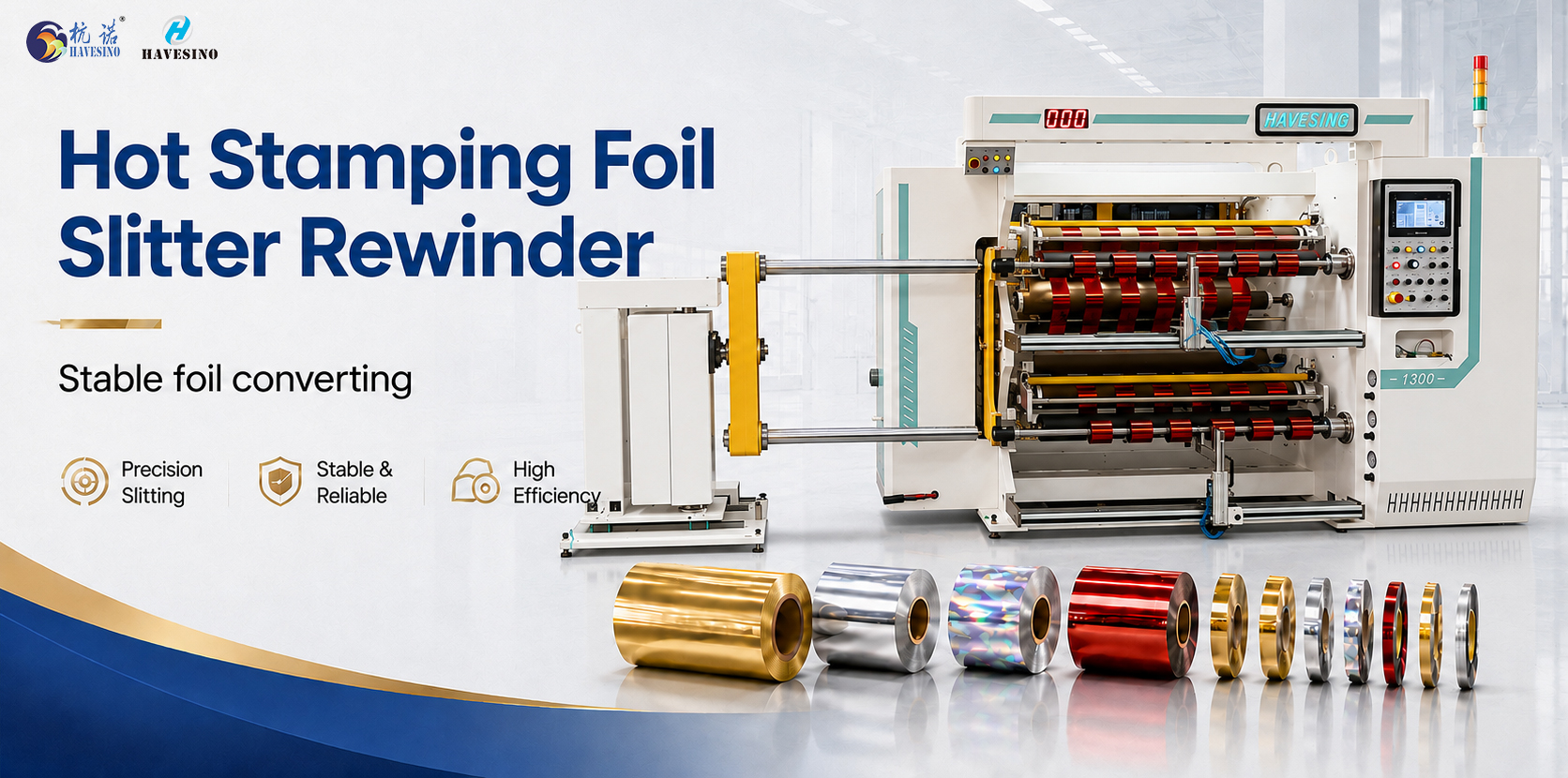
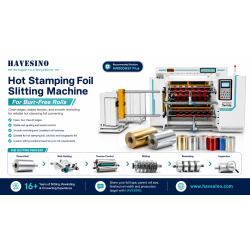
For hot stamping and related foil converting applications, HAVESINO provides dedicated foil slitting solutions. The HN800HSF Plus is a hot stamping foil slitter rewinder that can be considered for this application. The final configuration should be selected according to the actual foil structure, jumbo roll size, finished roll width, core requirements, and production target.
Buyers can provide material information and finished-roll specifications so the HAVESINO Group engineering team can evaluate a suitable slitting, tension-control, and rewinding arrangement. HAVESINO has more than 16 years of experience in slitting and rewinding equipment, with machines installed in more than 100 countries and regions. The focus is on practical machine selection, stable tension control, clean slitting, and smooth rewinding.
Common Problems and Practical Considerations
A machine specification may look suitable on paper, but the real production result also depends on how the material behaves during converting. Buyers should discuss recurring quality problems with the machine supplier before confirming the configuration.
Common Issue | Possible Area to Review |
Wrinkles during running | Unwinding tension, roller alignment, web path, guiding, acceleration/deceleration settings |
Telescoping or loose finished rolls | Rewinding tension, roll build, shaft/core condition, material behavior |
Uneven roll faces | Web guiding, slit-width setup, rewinding alignment, winding stability |
Burrs or poor slit edges | Knife condition, slitting method, setup, material characteristics |
Surface scratches or contamination | Roller surface condition, web contact points, cleanliness, material handling |
These issues do not always come from a single machine component. Material variation, core condition, knife setup, operator settings, and maintenance can also affect results. For this reason, it is useful to provide representative material information and clearly describe the quality problems you want the new machine to solve.
FAQ
What information should I provide before choosing a hot stamping foil slitter rewinder?
Provide the foil type, jumbo roll width and diameter, core size, finished roll widths, finished roll diameter, expected production target, and any current slitting or rewinding problems. These details help the supplier recommend a more suitable configuration.
Is higher speed always better for hot stamping foil slitting?
No. Higher machine speed is useful only when the material can run stably and the required slit and rewind quality can be maintained. Tension stability, roll build, setup efficiency, and finished-roll consistency are equally important.
Can one foil slitting machine process different foil materials?
It may be possible depending on the materials and final configuration. Buyers should provide samples or detailed material information so the supplier can evaluate whether the same machine setup is suitable for the intended foil range.
What finished-roll details affect machine selection?
Important details include slit width, number of lanes, finished roll diameter, core size, winding direction, and the required roll appearance. Narrow rolls or demanding winding conditions may require particular attention to tension and rewinding control.
Why is tension control important in a foil slitter rewinder?
Tension affects how the foil travels through the machine and how the finished roll is built. Stable, appropriate tension helps reduce wrinkles, loose winding, excessive roll hardness, and other roll-quality problems.
Conclusion
A suitable hot stamping foil slitter rewinder should match the material, roll dimensions, slit-width plan, tension requirements, rewinding quality, and production workflow. Comparing machines only by maximum speed or purchase price can overlook the factors that determine day-to-day stability and finished-roll consistency.
If you are planning a new foil converting line or upgrading an existing slitter, share your material type, jumbo roll size, finished roll requirements, and production target with HAVESINO. Contact HAVESINO to discuss a suitable hot stamping foil slitting and rewinding configuration based on your actual application.
.png?x-oss-process=image/resize,m_pad,h_250,w_250)


Leave A Comment