

 English
 German
 French
 Russian
 Spanish
 Japanese
 Korean
 Portuguese
 Ukrainian
 Arabic
 Italian
 Afrikaans
 Albanian
 Armenian
 Azerbaijani
 Basque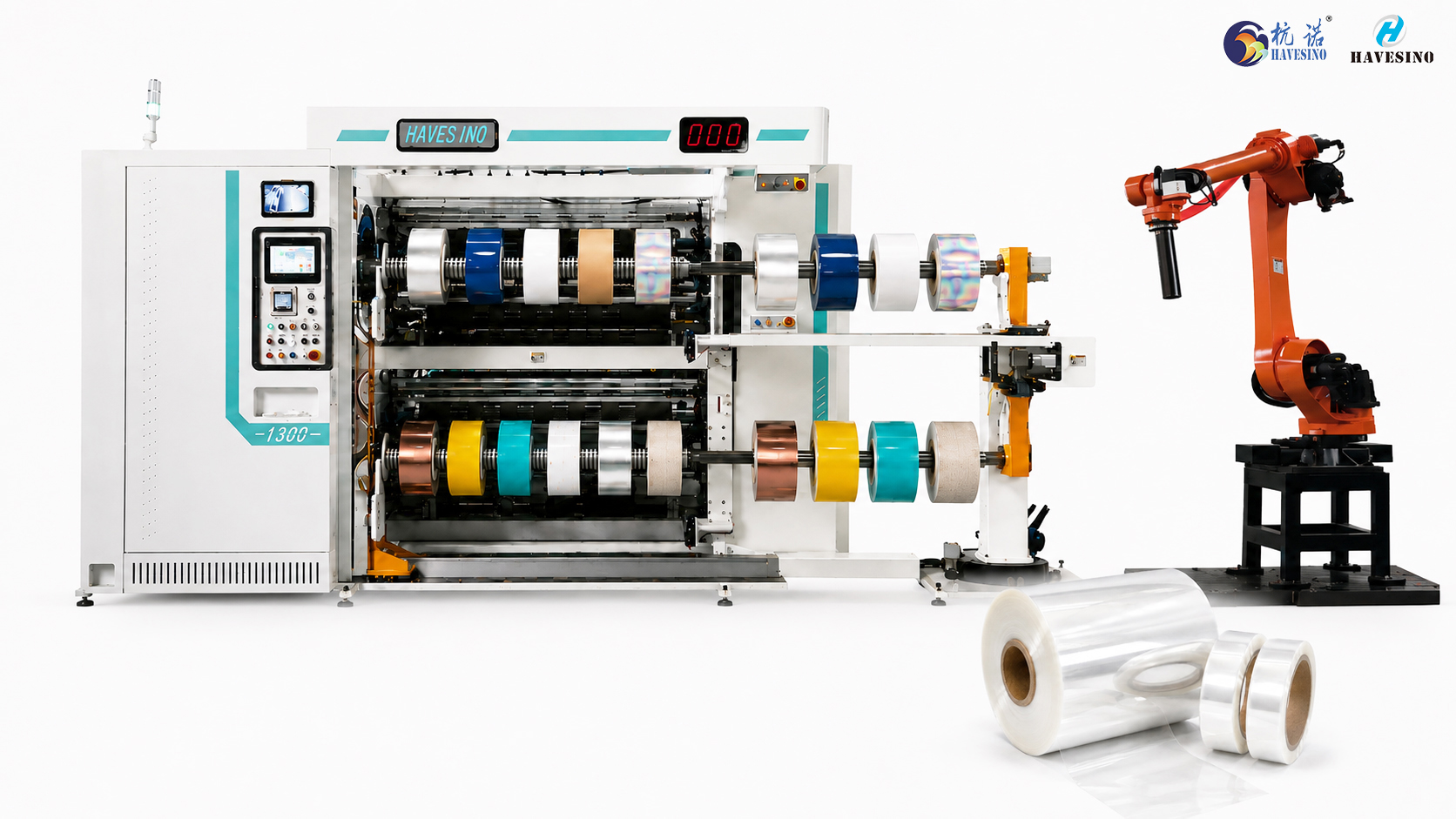
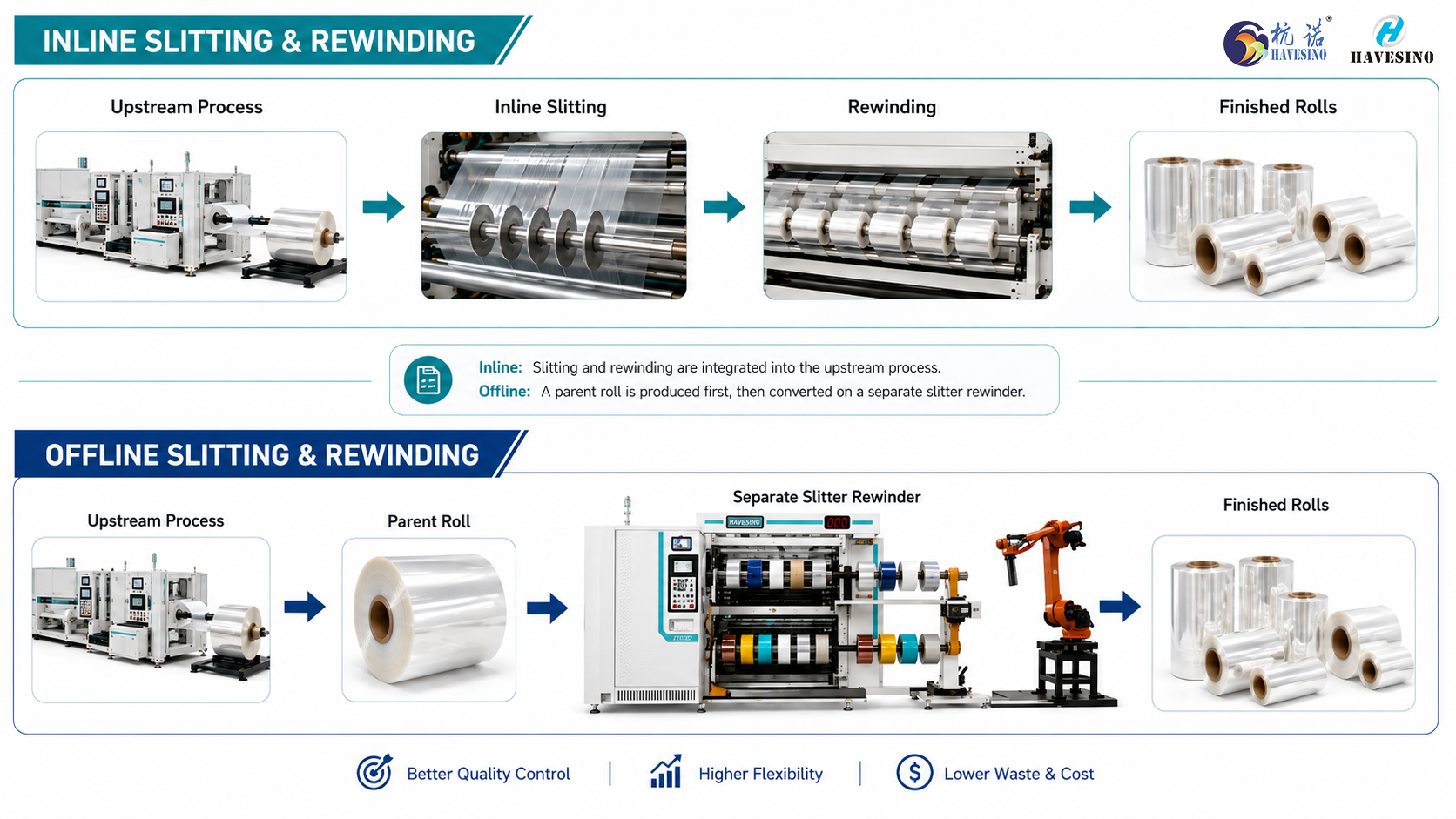
For converters planning a new production line, the choice between inline slitting vs offline slitting can affect workflow, machine utilization, quality control, changeover flexibility, and future expansion. Neither approach is automatically better. The more suitable option depends on what happens before and after slitting, how many product formats are produced, and how independently each process needs to operate.
In an inline process, slitting and rewinding are integrated directly with another converting operation, such as printing, coating, laminating, or another continuous web process. In an offline process, the parent roll is first produced or processed on one machine and then transferred to a separate slitter rewinder for final width conversion and rewinding.
For buyers, the practical question is not simply which arrangement looks more automated. It is which production structure gives the best balance of stable web handling, clean slitting, smooth rewinding, production flexibility, and manageable operating cost.
What Is Inline Slitting and Rewinding?
Inline slitting means the slitting stage is connected directly to an upstream or downstream process. The web continues through the production line without being converted into an intermediate parent roll that must later be moved to a separate slitting machine.
This arrangement can reduce material handling and may shorten the number of production steps. It is often considered when a factory makes relatively stable products with predictable widths and when the upstream process and slitting section can run effectively at compatible operating conditions.
However, the entire line becomes more dependent on process balance. If the printing, coating, laminating, slitting, or rewinding section needs to stop, the interruption may affect the connected process rather than only one independent machine.
What Is Offline Slitting and Rewinding?
Offline slitting uses a separate slitting machine after the material has already been printed, laminated, coated, metallized, or otherwise produced in parent-roll form. The parent roll is moved to a dedicated slitter rewinder, where it is slit into narrower widths and rewound according to the finished-roll requirement.
This structure gives the slitting operation its own production schedule. A converter can process rolls from different upstream machines, change slit widths independently, and organize slitting according to customer orders rather than according to the operating rhythm of the previous process.
For flexible packaging, labels, films, foils, and other roll materials with frequent changes in finished-roll width or order size, this independence can be especially useful.
Inline Slitting vs Offline Slitting: Key Differences
Factor | Inline Slitting | Offline Slitting |
Production flow | Integrated with another converting process | Separate slitting and rewinding operation |
Material handling | Fewer intermediate roll transfers | Requires parent-roll transfer and staging |
Scheduling | Linked to the connected line | Can be scheduled independently |
Changeover flexibility | Best when product formats are relatively stable | Practical for frequent width and order changes |
Process stoppage | May affect the connected line | Usually isolated to the slitting operation |
Quality adjustment | Must be coordinated with the complete line | Dedicated control of slitting and rewinding |
Expansion | Integration must be planned as a system | Additional slitting capacity can be added separately |
Why Production Workflow Matters
The most important difference is workflow dependence. Inline slitting reduces intermediate handling, but the slitting section must work as part of the speed, tension, and scheduling logic of the connected line. Offline slitting introduces an additional roll-handling step, but it allows the slitting department to operate independently.
Factories with long, stable production runs may value integration. Factories processing many SKUs, short orders, different materials, or frequent width changes may value independence more. The correct comparison should therefore be based on the complete production cycle rather than machine speed alone.
Why Material and Rewinding Requirements Matter
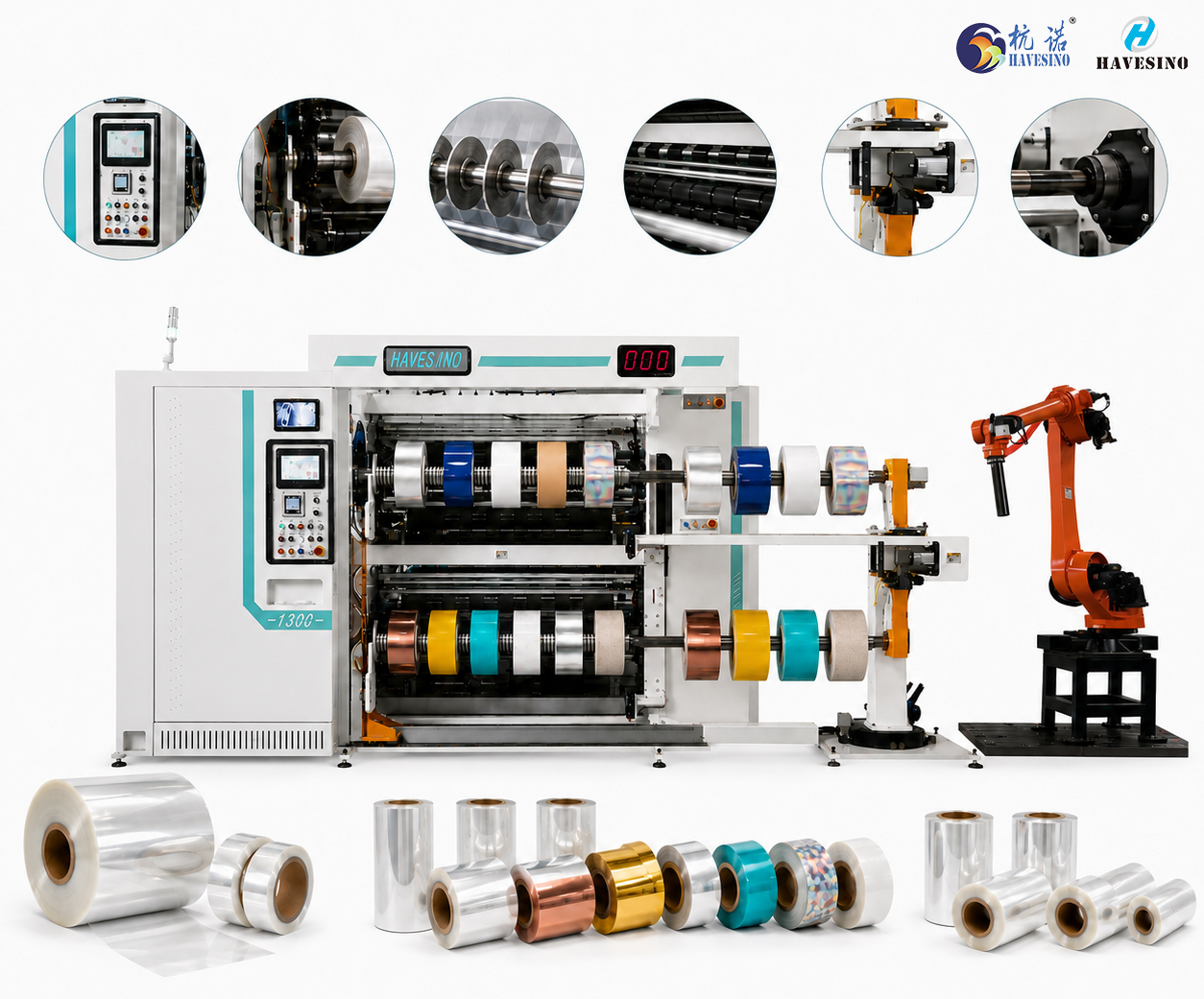
Different webs react differently during slitting and rewinding. Film stretch, laminate structure, foil sensitivity, coating condition, roll diameter, slit width, and finished-roll appearance can all affect machine setup. A dedicated offline slitter rewinder gives operators more freedom to optimize tension, web guiding, knife setup, and rewinding parameters specifically for the slitting job.
Inline slitting can still be practical when the web and product format are consistent, but the buyer should confirm that the connected process provides enough control for the required finished-roll quality. Stable tension and smooth rewinding remain important in either arrangement.
How to Choose Between Inline and Offline Slitting
Before choosing a production structure, evaluate the actual order mix and factory workflow. The following questions are more useful than asking whether inline or offline is generally better:
- Do you produce a small number of standard widths or many different finished widths?
- How often do jobs change during a shift?
- Does the upstream process run at conditions compatible with slitting and rewinding?
- Would a slitter stoppage stop the complete line?
- Do you need to slit parent rolls produced by several different machines?
- How important is independent quality inspection before final slitting?
- Is factory floor space more limited than scheduling flexibility?
- Do you expect to add new materials or product formats in the future?
If the answers point toward standardized production and reduced handling, inline slitting may be worth considering. If they point toward frequent product changes, independent scheduling, or a wide material range, a separate offline slitter rewinder is often the more practical structure.
Recommended HAVESINO Solution
HAVESINO Group focuses on slitting, rewinding, and converting equipment for flexible packaging, labels, TTR, hot stamping foil, POS paper roll, aluminum foil, copper foil, and related roll materials. For projects requiring independent slitting capacity, HAVESINO can recommend an offline slitter rewinder according to the material type, parent-roll condition, finished-roll size, and production target.
For flexible packaging applications, a flexible packaging slitter rewinder can be selected according to actual roll size and production needs. Models such as HN1300 PLUS, HN800 PLUS, HN1300TC, or wider web slitter rewinders can be discussed when relevant to the application, but the final configuration should be determined from real material and finished-roll requirements rather than model name alone.
For customers evaluating inline production, HAVESINO can also discuss whether a dedicated slitting stage or an integrated converting arrangement is more practical for the intended workflow. The goal is to match the machine structure to the complete production process, not simply to add more functions.
Common Problems and Practical Considerations
Line imbalance is one common issue in inline production. A connected line can only perform well when each section can operate at compatible conditions. If one stage requires frequent stops or adjustments, overall utilization may fall.
For offline production, extra material movement and temporary parent-roll storage should be planned carefully. Roll identification, handling procedures, and production scheduling become important because material passes through separate operations.
Changeovers also deserve attention. A factory producing many slit widths may gain more from fast, organized offline changeovers than from an integrated line designed around a narrow product range. Likewise, a factory producing one stable product for long periods may not need the same level of independent flexibility.
Maintenance access and troubleshooting should be considered before purchase. With a separate machine, slitting-related maintenance can usually be isolated from upstream production. With an inline system, the effect of maintenance on the complete line should be evaluated during project planning.
FAQ
What is the main difference between inline and offline slitting?
Inline slitting is integrated with another converting process, while offline slitting uses a separate slitter rewinder after the parent roll has been produced or processed.
Is inline slitting always more efficient?
No. It can reduce handling steps, but overall efficiency depends on process balance, changeovers, stoppages, material behavior, and the compatibility of connected operations.
When is an offline slitter rewinder a better choice?
It is often practical when a factory handles multiple materials, frequent width changes, different order sizes, several upstream machines, or independent slitting schedules.
Can one offline slitter rewinder process different materials?
Depending on the machine configuration, one slitter rewinder may handle several compatible roll materials. The supplier should evaluate each material, roll size, slit width, and rewinding requirement before confirming suitability.
Is higher slitting speed the most important selection factor?
No. Stable tension control, clean slitting, smooth rewinding, changeover efficiency, roll handling, and usable production output are also important.
What information should I provide before choosing a slitter rewinder?
Share the material type, thickness, parent-roll width and diameter, finished-roll width and diameter, core information, production target, upstream process, and expected job-change frequency.
Conclusion: Which Slitting Rewinding Method Is Better?
There is no universal winner in inline slitting vs offline slitting. Inline production can reduce intermediate handling and fit stable, integrated processes. Offline slitting provides independent scheduling, broader changeover flexibility, and dedicated control of the slitting and rewinding stage.
For most investment decisions, the better choice is the one that matches the real order mix, material behavior, upstream equipment, finished-roll requirements, and expansion plan. A well-selected slitter rewinder should support stable tension, clean slitting, smooth finished rolls, and an efficient production workflow.
Share your material type, roll size, upstream process, finished-roll requirements, and production target with HAVESINO to discuss a suitable slitting and rewinding configuration.
Contact HAVESINO to discuss your film slitting and rewinding requirements.
.png?x-oss-process=image/resize,m_pad,h_250,w_250)


Leave A Comment